Staying independent and safe while aging in place often means finding ways to make everyday tasks easier. Getting dressed can become more challenging over time, especially with joint pain, limited mobility, balance concerns, or reduced hand strength. These difficulties may develop gradually with age, after an injury, or alongside long-term health conditions. With the right support, dressing can remain a safe and manageable part of daily life.
These simple, practical tools help reduce the need for bending, reaching, gripping, and balancing. When chosen thoughtfully, they can help lower the risk of falls, minimize daily frustration, and allow individuals to dress with greater ease and confidence. Understanding how dressing aids support daily routines can help make everyday tasks feel more manageable and dignified.
Dressing aids are simple tools that make putting on and taking off clothing, socks, shoes, and compression garments easier. They are often used by older adults, people recovering from surgery, or anyone with limited mobility, flexibility, or hand strength. Dressing aids help by:
By supporting these movements, dressing aids help maintain independence without requiring major lifestyle changes or home modifications.
Dressing aids are helpful for anyone experiencing challenges with daily clothing tasks. Common users include:
These aids are most beneficial when physical changes make bending, reaching, or gripping difficult, or when using buttons, socks, or shoes safely while seated is preferred. They can be used short-term during recovery or long-term as part of daily routines.
As people age, getting dressed can become more difficult for a variety of reasons. Common challenges include:
Dressing aids are designed to address these challenges and make daily routines safer, easier, and more comfortable.
Dressing aids make everyday routines easier, safer, and less tiring. These tools support specific tasks, helping reduce strain, improve balance, and maintain independence.
Sock aids hold socks or stockings open so your foot can slide in easily. Long straps or handles allow you to pull the sock up while seated, helping reduce bending and strain while supporting independence during dressing.
The Jobst Compression Stocking Donner aid makes putting on tight compression stockings much easier and gentler on the hands. It helps ensure proper compression therapy every day, without extra effort. Its lightweight design makes it easy to handle and store.
These aids are built to handle the extra resistance of compression garments, making them easier to apply. They help reduce strain on the fingers and hands, improve comfort and ease of use, and support consistent daily compression therapy.
The 2-in-1 Compression Stocking Aid and Sock Helper guides compression stockings onto the foot smoothly, reducing effort on fingers and hands. It helps prevent improper wear and ensures consistent pressure.
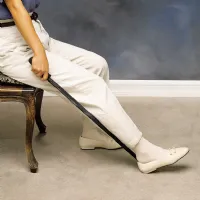
Long-handled shoe horns guide the heel into shoes while you remain seated or standing upright, reducing bending and balance effort. They are simple to use and work with many shoe styles, making shoe application easier.
The Good Grips Long Handle Shoe Horn has a long handle that allows people to put on shoes without bending or straining their backs. The non-slip grip makes it comfortable and secure to hold. It’s ideal for people with limited flexibility or balance concerns.
 | Good Grips Long Handle Shoe Horn View Product |
Dressing sticks use hooks or push-pull ends to assist with pants, sleeves, socks, or shoes, and some combine multiple functions into one lightweight, portable tool. They are versatile for many tasks, reduce reaching and twisting, and are easy to carry.
The Double-Ended Dressing Stick and Shoehorn helps with socks, shoes, and clothing all in one. The dual ends provide flexibility for a variety of tasks, making dressing faster and easier. Its lightweight design is perfect for home or travel use.
 | Double-Ended Dressing Stick and Shoehorn Dressing Aid View Product |
Button hooks guide buttons through holes, while zipper pulls make zippers easier to grasp, helping make dressing faster and reducing hand fatigue. They preserve clothing choice, reduce finger strain, and are small and portable.
The Button Hooks with Rubber Handle tool makes buttoning shirts and jackets much easier for those with weak or stiff fingers. The comfortable rubber handle provides a secure grip. It’s lightweight and easy to carry in a bag or drawer for everyday use.
 | Button Hook with Rubber, Foam, or Wooden Handle View Product |
Elastic shoelaces turn lace-up shoes into slip-on footwear while keeping them secure, reducing bending and fine motor effort during daily routines. They are easy and low effort, work with existing shoes, and support balance and independence.
The Norco Elastic Shoelaces offer a simple, practical solution for making everyday footwear easier to put on and take off. They help minimize hand strain and balance challenges, making them well-suited for daily wear.
 | Norco Elastic Shoelaces Dressing Aid for the Elderly and Disabled View Product |
Dressing kits combine several tools in one set, which is especially helpful after surgery or for those with limited mobility. They cover multiple dressing needs, reduce physical effort, and support safe recovery while simplifying dressing routines and reducing caregiver strain.
The Hip Kit includes several tools to assist with dressing after hip or knee surgery. It helps maintain independence while reducing strain on both users and caregivers. The comprehensive set is practical for recovery and everyday use.
 | Drive Medical Hip Kit - Post-Surgery Recovery Aid with Dressing Tools for Limited Mobility Support View Product |
Selecting the right dressing aids starts with identifying the most challenging daily tasks. Consider:
Tools that match your abilities and daily routines improve comfort, reduce frustration, and support long-term independence at home.
Sock aids, compression stocking donners, and long-handled shoe horns are the most helpful tools for putting on socks, stockings, and shoes without bending or straining. These aids allow you to sit comfortably while dressing and guide your feet into garments or footwear safely. They are especially useful for people with limited hip, knee, or back mobility, post-surgery recovery, or balance concerns, making daily dressing easier and safer.
Yes, dressing aids can significantly reduce fall risk by allowing you to complete dressing tasks while seated. Tools like sock aids, shoe horns, and dressing sticks minimize reaching, bending, and twisting movements that could cause instability. By keeping your center of gravity steady and reducing sudden movements, these aids make everyday dressing safer, particularly for older adults, those recovering from surgery, or anyone with balance or mobility challenges.
Dressing aids are highly recommended after surgeries such as hip or knee replacement. They help limit bending, twisting, and reaching, which protects the healing joints and muscles. Using aids like sock aids, long-handled shoe horns, or dressing sticks allows you to dress independently while following movement precautions. This not only supports recovery but also helps maintain dignity and confidence during daily routines when mobility is temporarily restricted.
Most dressing aids are designed to be simple and intuitive, but a short period of practice can help you use them effectively. Tools such as sock aids, button hooks, and dressing sticks may require learning the correct motions to make dressing smoother and safer. Practicing for a few minutes ensures comfort, proper use, and efficiency, allowing you to get dressed independently while minimizing strain on joints, muscles, and balance.
After hip or knee surgery, dressing aids that reduce bending and twisting are most helpful. Sock aids, long-handled shoe horns, and dressing sticks allow you to put on socks, shoes, and pants safely while seated. These tools help maintain proper precautions during recovery, protect healing joints, and support independence. They also reduce the need for assistance from caregivers, promoting confidence and safer daily routines during rehabilitation.
Practical tools designed for daily living can help older adults maintain their independence while aging in place. By reducing strain, improving safety, and supporting daily routines, they can make a meaningful difference in comfort and confidence. Choosing the right dressing aids depends on the task, mobility level, and personal preferences. When used correctly, these tools support safer, more comfortable daily living at home.

Co-Founder of Rehabmart and an Occupational Therapist since 1993. Mike has spent his professional career working in multiple areas of Occupational Therapy, including pediatrics, geriatrics, hand therapy, ergonomics and inpatient / outpatient rehabilitation. Mike enjoys writing articles that help people solve complex therapeutic problems and make better product choices.