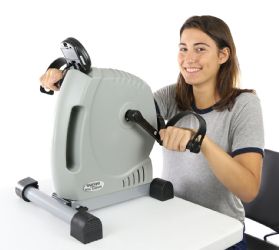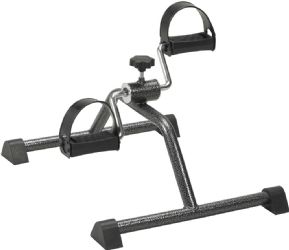
Leg exercise machines are specialized fitness and rehabilitation devices designed to enhance lower limb strength, endurance, and mobility. These machines cater to individuals recovering from surgery, injury, or chronic conditions such as arthritis, stroke, or limited mobility. As a physical therapist specializing in rehab and recovery, I’ve had extensive experience using these machines with patients. Below is my professional assessment of the top seven leg exercise machines based on their effectiveness, unique medical applications, and overall value.
The frequency of use depends on individual health conditions and rehabilitation goals. Daily sessions of 15-30 minutes are often recommended for general rehabilitation and circulation improvement. It’s always best to consult with a physical therapist to determine the optimal exercise plan for your specific need
 | Motorized Full Body Exerciser Bike - PhysioPedal by Nobol | Ideal for Low-Impact Rehab and Fitness View Product |
The PhysioPedal is a motor-assisted leg exerciser designed for individuals with severe mobility limitations. It provides passive, assisted, and active exercise modes to accommodate different levels of strength and endurance.
Best for: Patients recovering from strokes, spinal cord injuries, or those with severe muscle weakness.
 | Knee Extension Device for Range of Motion Therapy and Rehab by Motion Restore View Product |
A device specifically designed to restore knee motion through guided flexion.
Best for: Patients recovering from ACL surgery or total knee replacements.
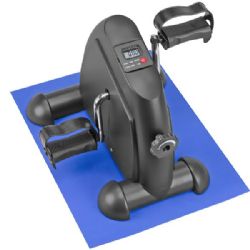
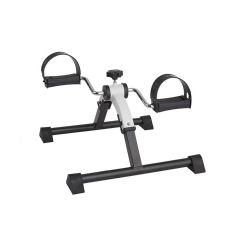
 | DMI Mini Exercise Bike Fitness Mini Cycle with Mat View Product |
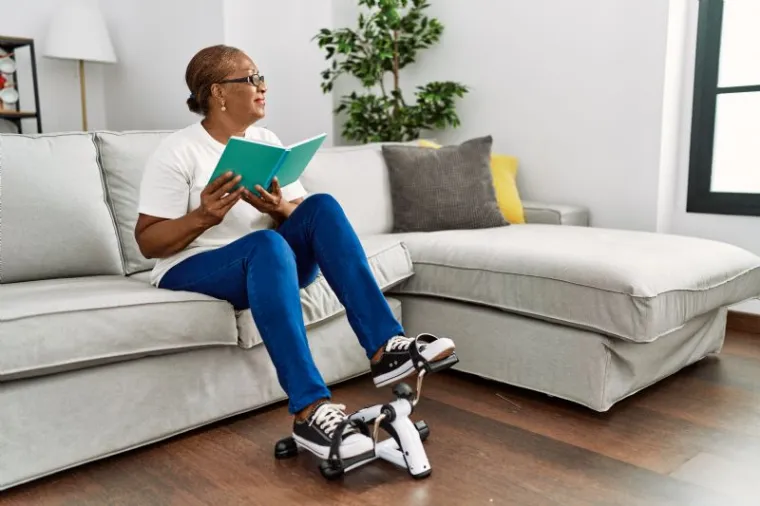
A compact, lightweight pedal exerciser designed for convenient seated workouts, perfect for home or office use.
Best for: Seniors, office workers, or anyone needing low-impact movement throughout the day.
 | OPTP Knee Glide by Bob and Brad - Low Impact Exercise for Knee Surgery Recovery View Product |
A simple, slide-based device designed for improving knee range of motion (ROM).
Best for: Post-knee surgery patients needing to regain joint mobility.
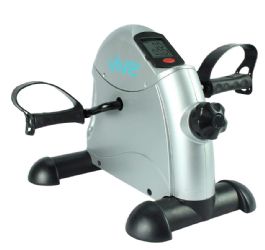
 | Pedal Exerciser with Adjustable Resistance and Compact Design by Vive Health View Product |
A user-friendly pedal exerciser with a digital display for tracking time, distance, and calories burned.
Best for: Older adults, post-surgical knee and hip rehab patients.
 | Portable Leg Press Device with Adjustable Footplate and Optional Gaming Sensor | The MOVAO Mini View Product |
A resistance-based leg press device designed for strength training and rehabilitation.
Best for: Strength training post-ACL reconstruction or joint surgery rehabilitation.
 | Cubii Go Under Desk Elliptical Machine View Product |
An under-desk elliptical designed for low-impact cardiovascular and muscular conditioning.
Best for: Seniors, post-surgical recovery, and individuals with arthritis or limited mobility.
The best leg exercise machines for seniors are those that promote gentle, low-impact movement to enhance circulation and mobility without excessive strain. Machines that offer smooth pedaling or guided motion can help maintain joint health, reduce stiffness, and improve muscle engagement.
For knee rehabilitation, machines that facilitate controlled flexion and extension are ideal. These devices help restore mobility, strengthen the surrounding muscles, and support proper healing without excessive stress on the joint.
Yes, devices like the PhysioPedal Motorized Exerciser and Cubii Go Under Desk Elliptical help maintain joint mobility and reduce stiffness, which is beneficial for arthritis patients.
Absolutely! Machines like the Mabis HealthSmart Under Desk Pedal Exerciser improve blood flow, reducing the risk of deep vein thrombosis (DVT) and enhancing circulation.
The best leg exercise machines for post-surgical recovery are those that allow for gradual, controlled movements to aid in regaining strength and range of motion. Machines that provide passive or adjustable resistance options can help patients transition safely through different phases of rehabilitation. The PhysioPedal Motorized Exerciser and OPTP Knee Glide are top recommendations for individuals recovering from surgeries such as knee replacement or ACL reconstruction.
Choosing the right leg exercise machine depends on your rehabilitation goals, mobility level, and therapy needs. For patients with severe weakness, the PhysioPedal’s motor-assisted functionality is a top pick. Those recovering from knee surgery can benefit from the OPTP Knee Glide or Motion Restore Knee Flexion Device, while the Vive Health Pedal Exerciser and Cubii Go are great options for gentle, ongoing movement.

Megan has been a part of Rehabmart since its inception nearly 20 years ago. For the past several years she has been enjoying her role as HR Director while maintaining her Physical Therapy license. When she isn't working on her next in-service or working to find a new team member, she enjoys her five children, helping those who have PT type ailments, baking, practicing yoga, and working out.
 FlexCycle Plus Under Desk Exercise Bike for Home and Office Portable Pedal Exerciser by Lifepro