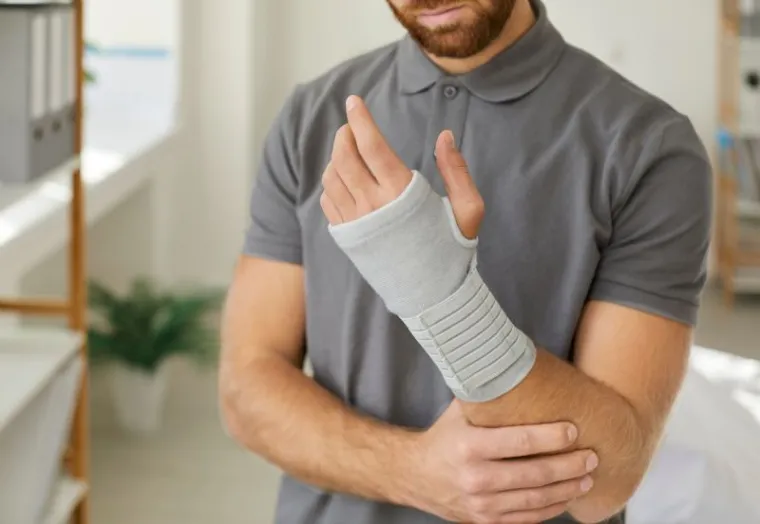
Wrist braces help manage pain and weakness that can affect daily activities, work, or recovery after injury. They support the joint, reduce strain, and protect healing tissues without surgery.
Wrist braces come in many designs and levels of support. Some limit movement to protect an injury, while others provide light compression for comfort during activity. The right brace depends on your condition, the support needed, and how it will be worn.
A wrist brace is an orthopedic support worn around the wrist and lower forearm. It helps stabilize the joint, limit excessive movement, and reduce stress on muscles, tendons, and nerves.
A wrist brace may:
Some braces have rigid stays or splints for maximum restriction, while others use soft, flexible materials that allow gentle movement while still offering support.
Wrist braces can help with a variety of wrist problems, such as:
The type of problem helps determine which wrist brace and level of support will work best.
Wrist braces support your wrist, and sometimes your thumb or forearm, to reduce pain, protect healing tissue, and make movement safer. The best choice depends on what you’re treating, how much support you need, and when you’ll wear it.
Best for: moderate sprains, post-injury protection, and carpal tunnel symptoms at night.
How it helps:
Things to know:
The Procare Cock-Up Splint features an adjustable lace-fit system for easy tightening, a semi-rigid design for steady support, and a flexible stay that allows you to control how much wrist movement is permitted.
 | Procare Cock-Up Splint View Product |
Best for: mild pain, swelling, arthritis, or general wrist comfort.
How it helps:
Things to know:
The Liberty Elastic Short Wrist Brace is made with soft, flexible material for comfortable everyday support and is ideal for mild soreness or activity-related fatigue.
 | Liberty Elastic Wrist Brace View Product |
Best for: adjustable support during work or repetitive tasks.
How it helps:
Things to know:
The Comfort Cool Ulnar Booster features adjustable straps for a tailored fit, a lightweight and breathable design, and provides support for tendon irritation or repetitive stress.
 | Comfort Cool Ulnar Booster View Product |
Best for: thumb joint pain, thumb strain, or tendon irritation near the thumb.
How it helps:
Things to know:
The Wrist and Thumb Brace Splint by Alpha Medical provides firm support for the thumb and wrist, features adjustable straps for comfort, and helps relieve pain from thumb arthritis or tendon irritation.
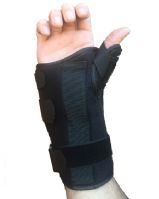 | Thumb and Wrist Brace Splint for Arthritis and Carpal Tunnel View Product |
Best for: children who need wrist support to stay in a safe position during healing or therapy.
How it helps:
Things to know:
The Pediatric Wrist Extension Splint is sized and shaped for children’s wrists, helps maintain safe and supported wrist positioning, and features comfortable padding for gentle daily wear.
 | Pediatric Wrist Extension Splint View Product |
Nerve issues (like tingling or numbness) may benefit from positioning instead of tight compression.
Choosing the right level prevents over-restriction or under-support.
Some people use different braces for day and night.
A brace that doesn’t fit well can be uncomfortable and less effective.
Comfortable braces are easier to wear, which helps your wrist heal faster.
Wearing your wrist brace correctly is important for safe healing and to prevent additional issues. The amount of time you should wear it depends on your condition, so it’s best to follow your doctor or therapist’s instructions. Some braces are only necessary during activities that cause pain, while night braces are typically worn while sleeping. Braces used after an injury may need to be worn for several weeks. However, wearing a brace longer than recommended can lead to stiffness or weakness.
See your doctor if:
Your doctor can determine whether bracing alone is enough for your condition.
The best wrist brace for carpal tunnel holds your wrist in a neutral position to reduce pressure on the median nerve, easing numbness, tingling, and pain. Night braces are often recommended, and some people wear braces during activities that trigger discomfort, like typing or lifting.
Yes. Nighttime braces prevent wrist bending while you sleep, reducing morning pain, stiffness, or numbness. Make sure your brace is labeled for sleep and use it consistently for best results.
Yes, you can wear a wrist brace during activities that cause pain, like typing or lifting. It supports the wrist, reduces strain, and can be used with therapy or exercises, all while allowing normal hand movement.
It should fit snugly but never be painful. Fingers should move freely, and straps can be adjusted if swelling changes, keeping support without cutting off circulation.
Yes. Overuse can cause stiffness, reduced flexibility, or weaker muscles. Braces protect the wrist, not replace movement. If symptoms worsen or don’t improve, check with your doctor.
Wrist braces are commonly used to relieve pain, protect injuries, and support healing. Choosing the right wrist brace depends on your condition, how much support you need, and when you’ll wear it. Understanding these factors helps the brace work effectively without restricting movement more than necessary. If pain or numbness continues, your doctor can guide you.

Megan Smith, PT, Executive Director of HR
Megan has been a part of Rehabmart since its inception nearly 20 years ago. For the past several years she has been enjoying her role as HR Director while maintaining her Physical Therapy license. When she isn't working on her next in-service or working to find a new team member, she enjoys her five children, helping those who have PT type ailments, baking, practicing yoga, and working out.







~3.jpg&maxheight=250&width=365&product_name=VertaLoc Wrist Brace With Thumb Spica "VertaLoc Wrist Brace With Thumb Spica")


