
For people who need extra support to stand safely, specialized equipment can make upright positioning possible. Standing frames are designed to help children, teens, and adults spend time on their feet when they cannot stand independently. This upright positioning can support daily function, comfort, and participation in activities. Different designs offer different levels of support and movement. Choosing the right type depends on posture, strength, and how the frame will be used.
Standing frames are not one-size-fits-all devices. Some models provide full support to help users achieve standing, while others offer partial assistance for transfers or weight bearing. Frames may be used primarily for therapy or designed to fit into daily routines at home or school. Understanding the main types can help narrow down options that are both safe and appropriate for regular use.
Standing frames are grouped by how they support the body and how the user moves into a standing position. Some provide full-body support with caregiver assistance, while others help users transition from sitting to standing with partial weight bearing.
Certain designs allow gentle movement while upright, whereas others focus on steady, stable positioning. Grouping frames this way makes it easier to match equipment to posture needs, strength level, and daily use goals.
Some upright standers, such as the Symmetry Stander, are designed for users with good head and trunk control and offer adjustable features that can grow with the user over time.
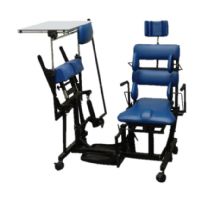 | Symmetry Solid Seat Stander and Positioning System View Product |
Sit-to-stand models, including the EasyStand Evolv, provide adjustable support and assist with gradual transitions, making them useful for individuals who can bear partial weight and want more independence during transfers.
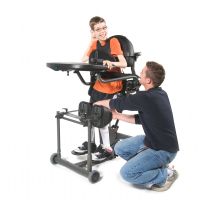 | EasyStand Original Evolv Sit To Stand Standing Frame Packages View Product |
Standing frames support safe upright positioning for people who cannot stand independently. The right type depends on posture, strength, movement ability, and daily use needs.
Some designs focus on full-body support, while others encourage assisted standing or movement. A therapist or healthcare provider can help determine which option is most appropriate. When selected and adjusted properly, standing frames can become a valuable part of everyday routines.

Co-Founder of Rehabmart and an Occupational Therapist since 1993. Mike has spent his professional career working in multiple areas of Occupational Therapy, including pediatrics, geriatrics, hand therapy, ergonomics and inpatient / outpatient rehabilitation. Mike enjoys writing articles that help people solve complex therapeutic problems and make better product choices.







.jpg&maxheight=250&width=365&product_name=Accessories for EasyStand Evolv Stander "Accessories for EasyStand Evolv Stander")
