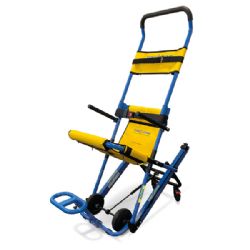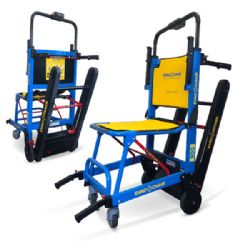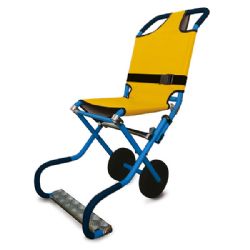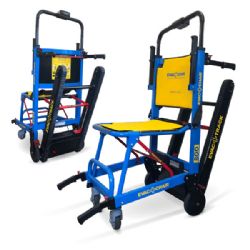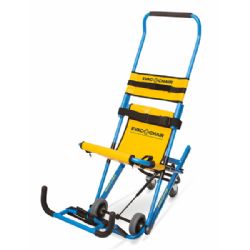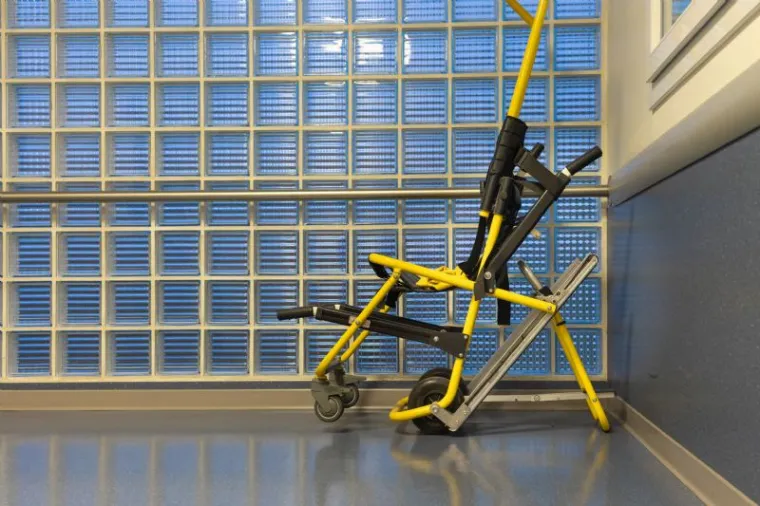
Evacuation chairs are designed to help people with limited mobility move down stairwells safely when elevators are not available.
Rather than relying on lifting, carrying, or rushed decisions during a stressful event, evacuation chairs provide a controlled way to assist someone while they remain seated and supported. These devices are commonly used in hospitals, schools, office buildings, residential facilities, and public spaces where emergency plans must address a wide range of mobility needs.
Understanding how evacuation chairs work and how they are typically used can help safety planners, caregivers, and building managers make more informed decisions about emergency preparedness.
An evacuation chair is a device used during emergencies to help a person who cannot safely go down stairs without assistance. It is typically used when elevators are not available, such as during a fire or power outage. In building safety and accessibility planning, evacuation chairs support safe and inclusive exit routes for everyone.
Evacuation chairs are different from everyday wheelchairs. They are designed for short-term use and are stored near stairwells so they can be used quickly when needed. Most evacuation chairs include supportive seating and safety features that allow controlled movement on stairs. An evacuation chair does not replace a person’s mobility device. Instead, it offers a practical and respectful way to help someone reach a safer location during an emergency.
The Atlas Wheelchair Lift is a different type of evacuation support tool that combines a stair-climbing wheelchair with powered lifting support. Unlike traditional evacuation chairs that focus only on a controlled descent, the Atlas is designed to move people up and down stairs when elevators can't be used.
This innovative device is often used in settings where evacuation plans must account for stair travel in both directions, such as older buildings, emergency response situations, or buildings with complex layouts. The person remains seated and supported while the motorized system helps with stair movement, cutting the physical effort needed to transport someone.
 | Wheelchair Stair Lift with 440 lbs. Capacity | Portable Stair Climber Atlas Wheelchair Lift View Product |
Because the Atlas is powered, it's extremely helpful in situations where staff may not have the strength or training needed to manage manual evacuation equipment. It also supports safer handling for people who can't transfer easily or who might need a higher level of stability during movement. The Atlas is perfect for emergency preparedness teams, first responders, schools, and buildings that need a portable solution for stair access when standard evacuation chairs may not be enough.
Evacuation chairs are designed to limit the need for manual lifting during stair evacuation. Before entering the stairwell, the person being assisted is secured in the chair to support comfort and safety. Many evacuation chairs include built-in resistance or track systems that help control speed and maintain stability as the chair moves down each step.
This controlled movement allows the helper to focus on balance, communication, and guidance rather than physical strength alone. Most evacuation chairs are operated from behind, which gives the helper clear visibility and control. Many models also include wheels for flat surfaces, making it easier to move through hallways and landings before and after using the stairs.
The EvacuTrac CD8 uses a track-based system that helps guide movement smoothly down stairs. This design is often chosen for buildings with longer stairwells or steeper staircases, as it provides added stability and control during descent.
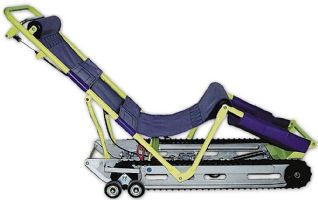 | Garaventa Evacu-Trac - Evac Chair for Emergency Evacuation via Stairs View Product |
In many emergencies, elevators are unsafe or automatically turned off. Fire safety guidance often prioritizes using stairwells in these situations. This can create serious challenges for people who cannot safely use stairs without assistance.
Evacuation chairs offer a stable and manageable way to move down stairwells during an emergency. By reducing the need for lifting and supporting, controlled movement helps lower the risk for both the person being assisted and the helper. For this reason, evacuation chairs are often included in inclusive emergency planning.
The Evac Chair Power 800 includes powered assistance to help reduce physical strain on helpers. It is well-suited for environments where heavier occupants may need assistance or where staff strength varies. This model supports safer handling while maintaining controlled movement on stairs.
 | Evac+Chair Power 800 Electric Evacuation Chair View Product |
Evacuation chairs can support people who may have difficulty using stairs during an emergency. This includes individuals who:
Evacuation chairs are most commonly used in multi-story buildings that serve a wide range of people, including:
Where evacuation chairs are placed and how they are used can change depending on the building layout, stair design, and the needs of the people inside. Having clear instructions and trained staff is essential for using the chairs safely and effectively.
The Evac Chair 500H is designed for frequent use and higher capacity needs. It offers enhanced support features and durability, making it a practical option for facilities that conduct regular drills or serve a larger number of occupants with mobility limitations.
 | Evac+Chair 500H Bariatric Emergency Evacuation Chair View Product |
Evacuation chairs work best when they are part of a larger emergency action plan. Training usually focuses on:
Practicing these steps during regular drills helps staff feel prepared and confident in a real emergency.
When choosing an evacuation chair, it is important to consider features that affect both readiness and practical use:
The best choice often depends on the stair design, building layout, and the needs of the people who may use the chair.
Many evacuation chairs are designed to be used by a single trained helper. However, factors such as the person’s weight, stair design, and staff comfort may mean additional assistance is needed.
Not always. Some people may not be able to transfer safely or may need a different evacuation plan based on their medical or physical needs.
This depends on the building’s size, layout, number of floors, and typical occupants. Placing chairs near multiple stairwells is usually more effective than relying on just one.
Most evacuation chairs are made for standard indoor staircases found in offices, hospitals, and residential buildings. Performance can vary depending on stair width, step height, and landing size, so it is important to match the chair to the building’s stairwell design and test it during training.
Yes. Evacuation chairs should be checked regularly to make sure straps, tracks, wheels, and braking systems work properly. Many facilities include them in routine safety inspections and review them during emergency drills to ensure they are ready when needed.
Evacuation chairs provide a practical option when stairs are the only way to exit a building. Their value comes from being familiar, accessible, and ready to use without adding extra stress during emergencies.
For many organizations, effective preparedness means selecting tools that fit real building conditions. Reviewing evacuation chairs and making sure they match the building layout, staff training, and occupant needs can help reduce risk and improve safety when it is most important.

Co-founder/CEO of Rehabmart, Pediatric Occupational Therapist, husband, and father. Passionate about connecting special needs kids with superb nutrition, sensory integration, and complementary health strategies. Excited about Rehabmart's mission to become the premier online educational platform which empowers caregivers by spotlighting innovative devices and interventions to achieve optimal patient response and recovery.