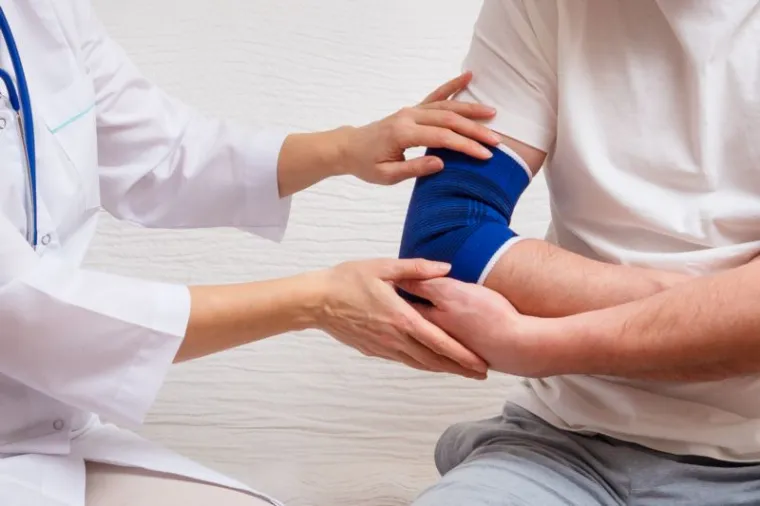
How a Tennis Elbow Brace Supports Recovery and Prevents Re-Injury

Tennis elbow, or lateral epicondylitis, is a common condition among athletes, especially tennis players. It results from repetitive stress to the forearm extensor tendons, leading to pain, inflammation, and decreased grip strength. The use of tennis braces, including elbow bands and epicondylitis clasps, is an evidence-based approach to reducing pain and promoting functional recovery. This clinical protocol outlines a structured rehabilitation approach incorporating these braces.

Tennis Elbow Brace: Evidence-Based Benefits

Several studies suggest that counterforce braces effectively reduce strain on the extensor tendons by redistributing forces away from the inflamed tendon insertion point. Research published in The Journal of Orthopaedic & Sports Physical Therapy demonstrates that elbow braces improve grip strength and reduce pain in patients with tennis elbow.

When to Use a Tennis Elbow Brace in Sports Injury Rehabilitation

Eligibility Criteria:

  • Patients with confirmed lateral epicondylitis via clinical exam or imaging
  • Athletes experiencing pain during gripping or wrist extension
  • Cases where conservative treatments (ice, NSAIDs, physiotherapy) have been insufficient
  • Post-surgical elbow rehabilitation cases requiring load management

Contraindications:

  • Skin infections or open wounds at the brace application site
  • Circulatory disorders (e.g., Raynaud's)
  • Peripheral neuropathies causing sensation loss
  • Severe elbow joint instability or fractures

Step-by-Step Clinical Guidelines

Step 1: Choosing the Right Type of Tennis Elbow Brace

Different types of braces suit different needs. Below are the best options for various stages of recovery.

1. GelBand Tennis Elbow Arm Band

  • Best for early-stage lateral epicondylitis and pain management
  • Mechanism: Provides uniform pressure to the extensor tendons, reducing stress and inflammation.
  • Recommended for: Athletes who require mild support without restricting movement.
Recommended Product: GelBand Tennis Elbow Arm Band

2. Elbow Band for Epicondylitis

  • Best for moderate symptoms and return-to-sport phase
  • Mechanism: Utilizes a strap with targeted compression to reduce strain on the lateral epicondyle.
  • Recommended for: Athletes engaging in light to moderate training.
Recommended Product: Elbow Band for Epicondylitis

3. Epicondylitis Clasp

  • Best for chronic lateral epicondylitis requiring focused pressure
  • Mechanism: Provides a rigid structure that applies targeted pressure to specific muscle groups, reducing inflammation.
  • Recommended for: Athletes needing a long-term brace solution during competitive sports.
Recommended Product: Epicondylitis Clasp

4. Episport Epicondylitis Clasp

  • Best for advanced protection and maximum support
  • Mechanism: Dual-compression system for superior stabilization.
  • Recommended for: Athletes in high-impact sports requiring extensive movement restriction.
Recommended Product: Episport Epicondylitis Clasp

Step 2: Fitting and Adjusting a Tennis Elbow Brace

Positioning the Brace

  • Locate the Painful Spot: Identify the lateral epicondyle through palpation.
  • Placement: Position the brace 2 cm distal to the lateral epicondyle, ensuring optimal compression on the extensor tendons.
  • Tightness: Adjust for a firm but comfortable fit; the athlete should not experience numbness or circulation loss.
StageBrace TypeRecommended Wear Time
Acute Pain GelBand Tennis Elbow Arm Band During all activities causing pain
Subacute Phase Elbow Band for Epicondylitis 3–4 hours/day during training
Return to Play Epicondylitis Clasp Throughout practice & post-activity
Chronic Cases Episport Epicondylitis Clasp As needed, during high-impact activities

Step 3: Progressive Rehabilitation Plan

Phase 1: Acute Management (Weeks 1–2)

  • Rest and NSAIDs to reduce inflammation.
  • Brace Use: GelBand Tennis Elbow Arm Band or Elbow Band for Epicondylitis.
  • Exercises:
    • Isometric wrist extension holds (3 sets of 10)
    • Pain-free passive stretching (30-sec holds, 3 reps)

Phase 2: Strengthening & Mobility (Weeks 3–6)

  • Brace Use: Elbow Band for Epicondylitis or Epicondylitis Clasp.
  • Exercises:
    • Eccentric wrist extension (3 sets of 15, every other day)
    • Forearm supination/pronation with resistance bands
    • Grip strengthening (squeeze ball, 5 sets of 10)

Phase 3: Functional Recovery & Return to Sport (Weeks 7–12)

  • Brace Use: Episport Epicondylitis Clasp during training.
  • Exercises:
    • Sport-specific movements (racket swings, resistance band strokes)
    • Plyometric drills (medicine ball throws)
    • Gradual return to full gripping and wrist extension

Monitoring and Adjustments

  • Pain Reassessment: Use the VAS Scale weekly.
  • Functional Testing: Check grip strength and forearm endurance at Week 4, Week 8, and before returning to full activity.
  • Brace Adjustments: Modify placement if discomfort arises; switch brace type as symptoms progress.

Final Thoughts

Tennis braces play a vital role in managing lateral epicondylitis by redistributing forces and reducing tendon strain. Integrating these braces into a structured rehabilitation plan promotes faster recovery and allows athletes to return to their sport safely. Selecting the right brace at the right phase is key to ensuring optimal clinical outcomes.

Sources

  1. Shahabi, S., Bagheri Lankarani, K., Heydari, S. T., Jalali, M., Ghahramani, S., Kamyab, M., Tabrizi, R., & Hosseinabadi, M. (2020). The effects of counterforce brace on pain in subjects with lateral elbow tendinopathy: A systematic review and meta-analysis of randomized controlled trials. Prosthetics and Orthotics International, 44(5), 341–354. https://doi.org/10.1177/0309364620930618
  2. Bisset, L. M., Collins, N. J., & Offord, S. S. (2014). Immediate effects of 2 types of braces on pain and grip strength in people with lateral epicondylalgia: A randomized controlled trial. Journal of Orthopaedic & Sports Physical Therapy, 44(2), 120–128. https://doi.org/10.2519/jospt.2014.4744
  3. Sadeghi-Demneh, E., & Jafarian, F. (2013). The immediate effects of orthoses on pain in people with lateral epicondylalgia. Pain Research and Treatment, 2013, Article 353597. https://doi.org/10.1155/2013/353597

Author:

Co-founder/CEO of Rehabmart, Pediatric Occupational Therapist, husband, and father. Passionate about connecting special needs kids with superb nutrition, sensory integration, and complementary health strategies. Excited about Rehabmart's mission to become the premier online educational platform which empowers caregivers by spotlighting innovative devices and interventions to achieve optimal patient response and recovery.

Meet all of our experts here!