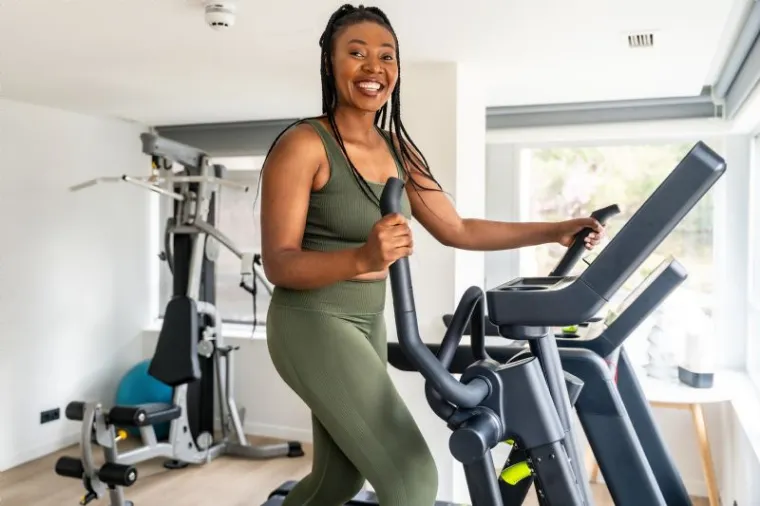
Choosing the right elliptical cross trainer for athlete recovery can be a game-changer when it comes to safe, effective rehab and performance conditioning. Whether you're bouncing back from injury or using active recovery days to maintain endurance, elliptical trainers provide a unique mix of cardio and resistance training with low joint stress. Below, we’ll explore the types of elliptical cross trainers best suited for athletes, what to look for, and which models stand out in real-world use.
An elliptical cross trainer is a stationary fitness machine that simulates walking, running, or stair climbing without excessive pressure on joints. By gliding in a smooth, circular motion, users engage both the upper and lower body in a full-body cardiovascular workout. This makes them ideal for post-injury recovery, reducing joint loading while improving range of motion, cardiovascular conditioning, and muscular endurance.
Best suited for: Athletes in post-operative rehab, injury prevention, endurance maintenance, and general fitness and active recovery.
 | VersaStep Ipsilateral Recumbent Elliptical Cross-Trainer by Healthcare International View Product |
Choose a model with adjustable resistance and incline to accommodate both light active recovery and high-intensity conditioning.
 | SportsArt S775 Pinnacle Cross Trainer View Product |
If the athlete is working on full-body coordination or recovering from upper extremity injuries, opt for a dual-action handle model.
Recumbent models are preferred for back or lower-limb injuries, while upright trainers work best for performance maintenance.
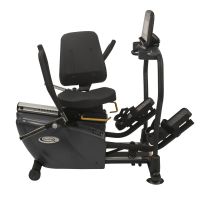 | PhysioStep MDX Recumbent Elliptical Cross-Trainer with Swivel Seat View Product |
Some elliptical machines are bulky. Compact or foldable models are better for home gyms or smaller clinics.
Commercial-grade trainers withstand heavy use; home models offer convenience and simplicity for solo recovery routines.
 | Commercial Elliptical Cross Trainer with Stepper by SportsArt, V886 Verso View Product |
Allows athletes to scale difficulty and simulate hill running or sprint intervals without impact.
Look for stride lengths of 18" to 22" to mimic natural gait patterns and prevent muscular imbalances during recovery.
Dual-action handles allow for total body involvement, increasing metabolic output and neuromuscular coordination.
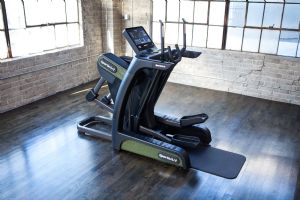 | Elliptical Cross Trainer with Customizable Options | SportsArt G886 Verso 3-in-1 ECO-POWR View Product |
High-quality flywheels and magnetic resistance systems create joint-safe motion that minimizes inflammation and re-injury.
Tracking heart rate, RPM, wattage, and resistance levels is essential for progressive overload and return-to-play protocols.
Recumbent options are better for load-sensitive athletes or post-op use. Upright machines support more athletic movement replication.
An elliptical cross trainer is excellent for low-impact cardiovascular exercise, which improves heart health, enhances endurance, and strengthens both the upper and lower body. It mimics walking, running, and stair climbing without the joint stress typically associated with those activities. This makes it a preferred modality for athlete recovery, general fitness, and rehabilitation after injury.
It depends on the user’s goals. For those needing joint-friendly movement, the elliptical is better. It reduces impact on knees, hips, and ankles while still providing a total body cardio workout. Treadmills are ideal for those training specifically for running, but they involve higher impact, which may not be suitable for injured athletes or older adults.
While ellipticals primarily offer cardiovascular benefits, they also help develop muscular endurance, especially in the glutes, hamstrings, quads, calves, and arms. Recumbent or resistance-enabled ellipticals can further support muscle engagement, particularly during high-resistance interval training sessions.
A good elliptical session typically lasts 20 to 45 minutes, depending on fitness level and recovery goals. For active recovery, 20 to 30 minutes at low to moderate intensity is effective. For conditioning, longer sessions with interval training may be appropriate. Always consult with a medical professional if you're returning from injury.
Yes. Elliptical cross trainers are commonly used in knee rehabilitation because they provide motion without high-impact stress. The smooth gliding movement strengthens the supporting musculature around the knee while minimizing shear forces that can aggravate healing tissues.
Yes, elliptical cross trainers are effective tools for weight loss when combined with proper nutrition and consistency. A 30-minute session can burn between 250 to 400 calories, depending on intensity and the user’s body weight. The full-body nature of the workout helps increase overall calorie expenditure.
To get the most benefit, choosing the right elliptical cross trainer means considering your available space, performance goals, and specific recovery or clinical needs. Elliptical cross trainers are essential tools in athlete recovery protocols. Whether managing a recent injury, transitioning from PT back to sport, or adding low-impact conditioning to a high-volume training week, these machines provide safe and effective support. Athletes shouldn’t have to sacrifice movement when injured. With the right elliptical, recovery becomes part of performance.

Megan has been a part of Rehabmart since its inception nearly 20 years ago. For the past several years she has been enjoying her role as HR Director while maintaining her Physical Therapy license. When she isn't working on her next in-service or working to find a new team member, she enjoys her five children, helping those who have PT type ailments, baking, practicing yoga, and working out.