
Monitoring weight accurately isn’t just a routine task; it’s often the first step in diagnosing fluid retention, managing chronic disease, and guiding safe medication dosing. Many medical professionals and consumers alike rely on a wide range of floor scales in hospitals, outpatient clinics, and in-home care settings to support patients across all levels of mobility and health. With so many options on the market, choosing the right floor scale can feel overwhelming. This guide simplifies that process by comparing twelve of the best medical-grade floor scales and breaking down exactly what to consider, whether you're equipping a high-traffic clinic or providing care in the community.
A floor scale is a flat-platform weighing device designed to measure body weight while the patient stands, sits, or uses mobility aids like wheelchairs. These devices are commonly used in hospitals, clinics, long-term care facilities, and in-home health settings to support accurate weight tracking, a critical component in diagnosing, managing, and monitoring health conditions.
Weight measurement is essential in monitoring fluid retention, managing medication dosages, and assessing nutritional status. The type of floor scale you choose should align with your patient's mobility level, weight range, and cognitive abilities.
These floor scales are best for patients with good mobility and balance who require routine weight checks. They're ideal for primary care offices, outpatient clinics, and in-home settings where quick, accurate measurements are needed without additional support features.
This sleek, low-profile model is a great entry-level choice. The Glass Digital Floor Scale offers a modern tempered glass design with an easy-to-read digital display, perfect for home healthcare or general clinical use.
 | Seca 807 Glass Digital Floor Scale View Product |
With its wider platform and slightly recessed surface, this scale makes it easier for patients to step on and off safely. It’s a practical option for outpatient settings or mobile health units.
 | Low Profile Digital Floor Scale View Product |
This model supports up to 550 lbs, making it ideal for higher-weight individuals who do not yet require bariatric accommodations. The extra-wide platform enhances safety without the need for rails or ramps.
 | Bariatric Digital Floor Scale for Medical Patients - Seca 813 View Product |
Bariatric patients require scales with higher weight limits, stability, and sometimes assistive features such as handrails or chair seats. These scales are essential for hospitals, long-term care facilities, and bariatric surgery clinics.
This heavy-duty scale supports up to 1,000 lbs and features an integrated handrail, making it ideal for patients who need extra balance support. It can be used in rehab settings where patients are regaining lower body strength.
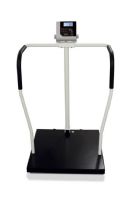 | Bariatric Scale with Handrail - 260-10-1 by Rice Lake Weighing Systems View Product |
This model speaks weight readings aloud in four languages, ideal for patients with vision impairments or low literacy levels. It’s also helpful in multilingual clinics. The voice function adds a layer of independence for patients managing their own care.
 | Bariatric High Capacity Four-Language Talking Digital Scale View Product |
Portability meets precision. With its carry handles and 660-lb capacity, this scale is excellent for home health nurses who need a reliable bariatric option on the go.
 | Detecto Body Weight Scale - DR660 Portable Bariatric Scale View Product |
A rugged design with medical-grade load cells, this model is built for high-traffic clinics and rehab facilities where heavy-duty use is a daily demand. The large platform ensures safety and stability.
 | Bariatric Medical Floor Scale View Product |
This dual-purpose scale allows patients to weigh while seated or standing. This is especially helpful for patients recovering from orthopedic surgeries who can’t stand for long durations.
 | Rice Lake Bariatric Scale with Handrail and Chair Seat View Product |
Combining mobility with a generous platform and 1,000-lb capacity, this scale is ideal for traveling medical teams who need to assess weight accurately across diverse patient populations.
 | Detecto Portable High Capacity Bariatric Scale View Product |
This ultra-reliable, tamper-resistant scale features a large digital display and rapid weight capture. Perfect for clinics or urgent care settings where speed and precision are critical.
 | DETECTO Portable Digital Scale Portable Athletic | APEX-AT View Product |
Wheelchair-accessible floor scales eliminate the need for patient transfers, increasing safety and efficiency. These are non-negotiable in long-term care, assisted living, and specialized rehab clinics.
This model includes a single-entry ramp for ease of access and has side rails for added stability. Ideal for patients with mobility devices, it minimizes the risk of falls.
 | Single Ramp Roll-On Wheelchair Scale by Rice Lake Weighing Systems View Product |
With entry and exit ramps, this scale simplifies the process of rolling on and off without turning. It’s a game-changer for facilities where caregivers are managing several patients daily.
 | Rice Lake Weighing Systems Dual-Ramp Wheelchair Scale View Product |
Choosing the right floor scale isn’t just about picking the most affordable or feature-heavy option. It’s about ensuring safety, accessibility, and clinical accuracy for the population you’re serving. Always start by matching the scale’s capabilities to the specific needs of your patients and the environment where it will be used. Here are the most important factors to consider:
Is the patient able to stand, or do they require seated or wheelchair support? For ambulatory patients, a low-profile scale may be sufficient. For patients with limited mobility, consider a scale with a built-in seat or one that accommodates wheelchairs with single or dual ramps.
Be sure to choose a scale with a weight capacity that exceeds the maximum patient weight by at least 50 lbs to ensure safe, long-term use. Bariatric scales typically support between 600 and 1,000 lbs and feature extra-wide, non-slip platforms for added safety and comfort.
Look for large, backlit displays that are easy to read in various lighting conditions. For patients with visual impairments or cognitive challenges, consider scales with audible weight announcements or multilingual voice prompts.
If you work in home health or provide care in multiple locations, a lightweight or foldable scale with built-in handles and rechargeable batteries can be extremely valuable. Portable bariatric scales allow for safe monitoring without sacrificing accuracy.
In high-traffic clinical settings, it’s essential to have a scale that’s easy to disinfect. Choose models with smooth surfaces such as tempered glass or stainless steel. Avoid materials that trap debris or moisture.
Make sure the scale you choose is compliant with recognized medical standards such as NIST certification for accuracy or FDA/CE approval for clinical-grade use. These certifications ensure the device meets the necessary safety and precision benchmarks for medical environments.
Scales in hospitals and outpatient clinics experience high foot traffic and daily usage, so they should be rugged, stable, and supported by reliable warranties. In contrast, home health providers may prioritize portability and compact storage.
While initial cost is a consideration, weigh it against features like accuracy, battery life, warranty, and repair options. An affordable scale that lacks long-term durability or clinical features may end up costing more over time.
Ultimately, selecting the right floor scale is about finding the intersection between patient needs, clinical demands, and safety standards. Take the time to review each model carefully, and if possible, consult with your clinical team to align on priorities.
Yes. High-quality floor scales offer medical-grade accuracy, especially when calibrated regularly. Models with NIST certification or FDA/CE compliance ensure consistent and reliable measurements in clinical settings.
Floor scales typically accommodate standing patients, while platform scales include a wider surface and ramps for wheelchairs or seated use. Platform scales are more inclusive and support higher weight limits for bariatric or mobility-challenged users.
Yes, bariatric floor scales are designed with reinforced frames, handrails, or seats to support patients over 600 lbs safely. These models are critical in bariatric programs and recovery care plans.
Choosing the right floor scale can dramatically improve the quality of care, patient safety, and workflow efficiency. Whether you're equipping a home healthcare kit, outfitting a clinic, or upgrading equipment in a bariatric unit, there's a model here that fits your unique needs. We encourage healthcare professionals to assess not just weight capacity, but also safety features, accessibility, and ease of use before making a decision.

Co-founder/CEO of Rehabmart, Pediatric Occupational Therapist, husband, and father. Passionate about connecting special needs kids with superb nutrition, sensory integration, and complementary health strategies. Excited about Rehabmart's mission to become the premier online educational platform which empowers caregivers by spotlighting innovative devices and interventions to achieve optimal patient response and recovery.







.jpg&maxheight=250&width=365&product_name=Digital Home Health Scale by Rice Lake "Digital Home Health Scale by Rice Lake")


