Upright bikes are a staple in rehabilitation clinics and home gyms alike. Whether you’re recovering from injury, managing chronic pain, or simply trying to boost cardiovascular endurance, choosing the right upright bike can make a measurable difference in outcomes. Also known as stationary upright cycles or rehab bikes, these machines offer a low-impact, full-body workout in a compact, accessible format.
In this guide, we’ll walk you through how to choose the right upright bike, what features to prioritize for different use cases, and which top-rated models are best suited to support your goals.
Upright bikes require the rider to sit in a more vertical position, which engages more of the core and upper body compared to a recumbent bike. This posture is ideal for improving posture, balance, and mimicking the muscle engagement of traditional outdoor cycling.
Yes. Upright bikes are excellent for rehabilitation when equipped with appropriate features like adjustable resistance and a low step-through frame. They're often used for knee, hip, and cardiac rehab due to their joint-friendly design and customizability.
Make sure the bike supports the user's height and weight. Most models have a max weight capacity ranging from 250 to 400 lbs. The seat height and reach should also be adjustable to allow for proper leg extension, reducing knee strain.
If you're following a structured rehab plan, it’s beneficial to choose a model with digital displays and programmable workouts to track resistance levels, time, heart rate, and recovery.
Magnetic resistance is ideal for clinical and home environments as it’s quieter and allows for more precise adjustments. Fan (air) resistance creates a more dynamic workout but tends to be noisier and less controllable for rehab purposes.
These models mimic a traditional bicycle and are designed for cardiovascular exercise and endurance training. They’re suitable for healthy adults and athletic individuals.
 | PhysioCycle XT Upright Bike & UBE Trainer View Product |
Rehab-specific models offer low step-through frames, fine-tuned resistance levels, and wide adjustment ranges to accommodate patients with limited mobility or strength.
 | Upright Exercise Bike with FTMS App Compatibility for Immersive Training - CYBOFit Bike B2000 by HCI Fitness View Product |
These use a fan to generate resistance based on pedaling speed. Great for athletic training but generally less suitable for rehab due to variability in intensity.
~2.jpg&newwidth=365&maxheight=200 "Endurance Fan Bike FB300B by Body Solid") | Endurance Fan Bike FB300B by Body Solid View Product |
These are smaller and designed for home users who need a space-saving solution. While convenient, they may lack the durability and stability needed for clinical rehab.
~1.jpg&newwidth=365&maxheight=200 "Best Fitness Chain Spin Style Bike") | Best Fitness Chain Spin Style Bike View Product |
Allows for customized positioning to ensure proper body alignment, reduce joint strain, and accommodate users of different heights.
~4.jpg&newwidth=365&maxheight=200 "Body-Solid Spin Exercise Bike for Endurance, Compact, 44-lb. Flywheel, 2-Way Adjustable Handlebars & Seat Pads, Durable Steel Frame") | Body-Solid Spin Exercise Bike for Endurance, Compact, 44-lb. Flywheel, 2-Way Adjustable Handlebars & Seat Pads, Durable Steel Frame View Product |
Enables easier mounting and dismounting, especially important for seniors, post-op patients, and individuals with mobility challenges.
 | Dynamic Upright Exercise Bike, Pre-Installed Programs with Metrics, Adjustable Seat, Pedal Straps, Backlit Display, C55U by SportsArt View Product |
Provides smooth, quiet operation with precise resistance adjustments: ideal for both clinical rehab and home use.
Tracks cardiovascular effort through pulse sensors or wireless telemetry to help users stay within safe heart rate zones during workouts.
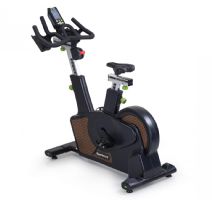 | ECO-NATURAL and ECO-POWR Indoor Stationary Exercise Bikes View Product |
Shows real-time feedback including time, distance, speed, RPM, calories burned, and resistance levels, which is useful for tracking progress and goal setting.
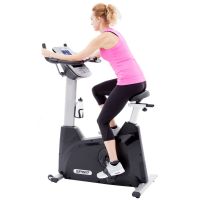 | XBU55 Upright Stationary Exercise Bike by Spirit Fitness View Product |
A heavy-duty frame ensures stability and safety during exercise, especially for users engaging in higher-resistance or longer-duration sessions.
 | Eco-Friendly Stationary Upright Exercise Bike, 40 Resistance Levels, Low-Profile, Fingertip Controls, C574U Eco-Natural/Senza by SportsArt View Product |
Some upright bikes have technological features such as wireless charging pads, customizable light colors, and various sensors like heart rate and oxygen monitors. Most bikes, however, have options that include accessories such as cup holders, extra pedals, or wheels for easier transport.
An upright bike is ideal for improving cardiovascular health, building lower body strength, and enhancing core stability. It provides a low-impact workout, making it suitable for users with joint concerns, those recovering from injury, or individuals managing chronic conditions such as arthritis or cardiovascular disease.
Yes, consistent use of an upright bike can help reduce overall body fat, including belly fat, when combined with a healthy diet. Upright biking is an effective form of aerobic exercise, which boosts calorie burn and supports fat metabolism. However, spot reduction is not possible, so overall fat loss is achieved through total body cardiovascular workouts.
Yes, 30 minutes of moderate-intensity cycling on an upright bike can contribute significantly to your daily cardiovascular activity needs. According to the CDC and American Heart Association, adults should aim for at least 150 minutes of moderate aerobic exercise per week. A half-hour session, five days a week, fits well within these guidelines and supports heart health, weight management, and endurance.
Upright bikes primarily target the quadriceps, hamstrings, calves, and gluteal muscles. Secondary engagement includes the hip flexors and core stabilizers, especially when the rider maintains proper posture. Some upright bikes with moving handlebars also incorporate upper body muscles such as the biceps and shoulders.
Yes, upright bikes with a low step-through frame and adjustable resistance settings are excellent for seniors. They offer a safe, controlled environment to maintain cardiovascular health, reduce fall risk through balance training, and improve joint flexibility. Always consult your healthcare provider or physical therapist to determine if an upright bike is appropriate for your specific health conditions.
Choosing the right upright bike is more than just picking a piece of exercise equipment: it’s selecting a tool that supports long-term mobility, cardiovascular health, and functional independence. Whether you’re a rehab patient recovering from surgery, an older adult focused on fall prevention, or someone looking to add low-impact cardio into your routine, an upright bike provides a clinically proven way to build endurance and lower-body strength safely and effectively.
The upright posture encouraged by these bikes activates the core, supports spinal alignment, and promotes postural control, which makes them a versatile option for a wide range of rehabilitation and fitness goals. Key features like a step-through frame, magnetic resistance, and adjustable seat height make a noticeable difference in comfort, usability, and outcomes, especially for users with joint limitations, balance concerns, or neuromuscular impairments.
Ultimately, the best upright bike is one that aligns with your current physical condition, therapy goals, space constraints, and long-term needs. Consulting with a licensed physical therapist or rehab specialist before making your final decision can ensure you choose a bike that enhances, not hinders, your progress.
For safe, consistent, and measurable improvements in strength, stamina, and cardiovascular health, an upright bike remains one of the most effective and accessible tools available.

Megan has been a part of Rehabmart since its inception nearly 20 years ago. For the past several years she has been enjoying her role as HR Director while maintaining her Physical Therapy license. When she isn't working on her next in-service or working to find a new team member, she enjoys her five children, helping those who have PT type ailments, baking, practicing yoga, and working out.