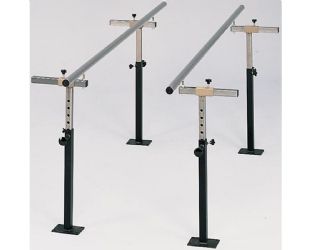
Regaining strength, balance, and confidence is a key part of many rehabilitation programs. A stable support system can make it easier to stand, take steps, and practice weight shifting safely during recovery. Parallel bars provide that support, making them a valuable tool for people recovering from surgery, injury, or neurological conditions that affect mobility.
Parallel bars are useful because they offer controlled support. A person can hold the bars while practicing stepping, standing, or shifting weight. This lowers the risk of falling and helps build confidence. Many therapists use parallel bars as a starting point before moving to walkers or canes. The strong frame and steady surface make early mobility training safer and easier for both patients and caregivers.
Parallel bars are used in many rehabilitation programs. They help people regain movement, strength, and coordination. They also support safe gait training during early recovery. The right setup can make each session more comfortable and productive.
People recovering from neurological conditions often begin walking again using parallel bars. The bars provide steady support so they can practice stepping safely. People who have had hip, knee, or ankle surgery also use them to relearn how to put weight on their legs with good form. Older adults may use parallel bars to work on balance, posture, and leg strength before moving on to other walking aids.
When working on balance, walking, or standing skills, parallel bars provide steady support and confidence during practice. They are commonly used in therapy settings, schools, and clinics to help people move safely while rebuilding strength and coordination.
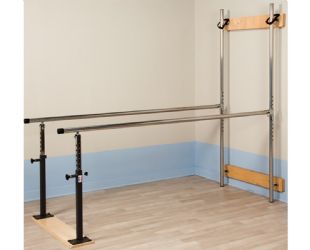
The Clinton Wall-Mounted Folding Parallel Bars are a great option when space is limited. They fold neatly against the wall when not in use, providing solid support during gait training while keeping the room flexible for other activities.
 | Clinton Wall Mounted Folding Parallel Bars View Product |
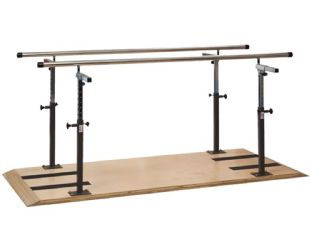
The Clinton Platform Mounted Parallel Bars are ideal for dedicated therapy spaces that require stability and frequent use. The fixed platform provides a secure base for walking practice, weight shifting, and balance training, supporting structured therapy sessions with consistent, durable performance
 | Clinton Platform Mounted Parallel Bars View Product |
Parallel bars are a valuable tool in rehabilitation because they give people the support they need during early mobility training. Choose bars that fit your height, available space, and therapy goals. If you are recovering from surgery, an injury, or a neurological condition, work with your healthcare provider to create a safe and effective recovery plan. Parallel bars help build strength, improve mobility, and boost confidence, guiding you step by step toward greater independence.

Megan Smith, PT, ED of Human Resources & PEO Services
Megan has been a part of Rehabmart since its inception nearly 20 years ago. For the past several years she has been enjoying her role as HR Director while maintaining her Physical Therapy license. When she isn't working on her next in-service or working to find a new team member, she enjoys her five children, helping those who have PT type ailments, baking, practicing yoga, and working out.