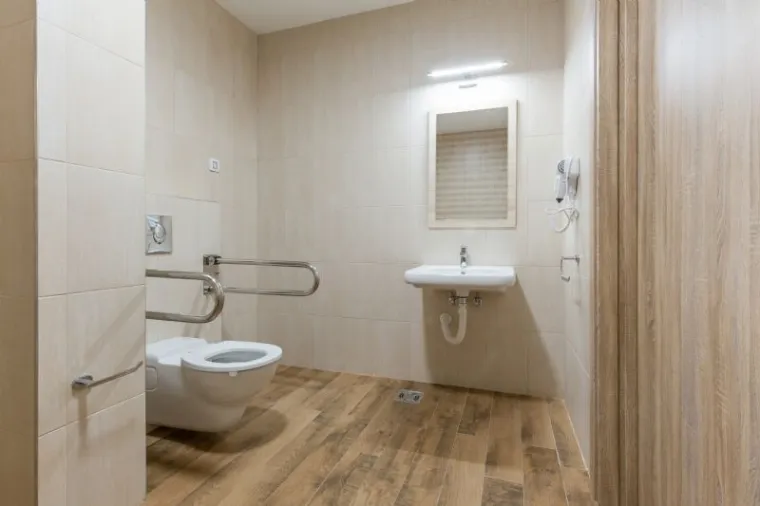
A raised toilet seat increases the height of the toilet, helping keep your hips more open while sitting and standing. After hip surgery, surgeons and physical therapists often recommend avoiding deep hip bending, usually beyond 90 degrees, during early recovery to protect the healing joint and reduce the risk of dislocation. Raised toilet seats are commonly used during this stage to make movement safer, with the choice of equipment guided by surgical approach, mobility level, and your doctor’s advice.
A raised toilet seat works by increasing the height of the toilet, allowing your hips to stay more open when sitting and standing. After hip surgery, surgeons often advise avoiding deep hip bending to protect healing tissues, but a lower toilet can force the hip into a sharper angle, increasing pain or the risk of dislocation. By using a raised seat, patients can maintain a straighter hip angle and reduce strain on the joint. For this reason, many physical therapists and surgeons recommend a raised toilet seat until hip strength and flexibility improve.
A raised toilet seat can help with comfort and safety during the early phase of recovery. It lets you move with less strain and may reduce pain when sitting down or getting up. This added height also offers better stability, which is helpful if you have weakness or balance changes after surgery. Some seats come with arms or handles for extra support, which can help you push up or steady yourself as you stand. Options like the Clean Shield Elevated Toilet Seat by Bemis or The Ultimate Raised Toilet Seat with Arms offer these features for safer bathroom use.
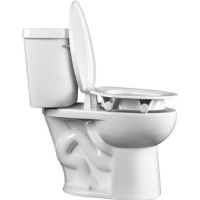 | Clean Shield Elevated Toilet Seat by BEMIS (Support Arms optional) View Product |
 | The Ultimate Raised Toilet Seat with Arms by Platinum Health View Product |
Using a raised toilet seat does not replace safe movement habits. You should continue following your surgeon’s or therapist’s instructions regarding hip precautions and activity limits. For many people, a raised toilet seat is a temporary tool that helps support safe movement. As strength and flexibility improve, it may no longer be needed, but always check with your care team before removing it.
A raised toilet seat can make bathroom use safer and more comfortable after hip surgery. It reduces deep hip bending, supports balance, and helps with easier standing and sitting. When choosing a seat, look for the right height, a secure fit, and optional arms if you need extra support. Always follow your health care provider’s guidance on hip precautions and mobility. Used correctly, a raised toilet seat can be a helpful part of early recovery.

Megan Smith, PT, Executive Director of HR
Megan has been a part of Rehabmart since its inception nearly 20 years ago. For the past several years she has been enjoying her role as HR Director while maintaining her Physical Therapy license. When she isn't working on her next in-service or working to find a new team member, she enjoys her five children, helping those who have PT type ailments, baking, practicing yoga, and working out.





 "Clean Shield Elevated Toilet Seat by BEMIS (Support Arms optional)")


