
One of the most crucial decisions caregivers and healthcare providers make is choosing the right air mattress for hospital bed use. These aren’t just mattresses; they are clinical tools that can prevent pressure ulcers, promote healing, and improve comfort and dignity during recovery.
Over the years, we’ve trialed and recommended many air mattresses across clinical and home settings. Below, we’ve compared six of the top low air loss mattresses, each chosen for their unique features, reliability, and how well they suit different patient needs.
An air mattress for hospital bed use is a medical-grade support surface that uses alternating air pressure or low air loss technology to reduce the risk of pressure injuries. They’re essential for individuals who are bed-bound, have limited mobility, or are recovering from surgery, spinal cord injuries, or chronic conditions like MS or ALS.
Types of air mattresses include:
 | Med-Aire Plus Alternating Pressure Mattress System with Low Air Loss by Drive Medical View Product |
When working with patients at very high risk for pressure ulcers, this system is often our first recommendation. The Med-Aire Plus provides dual therapeutic modalities—alternating pressure and low air loss—on a fully adjustable digital pump. It’s quiet, intuitive to use, and offers excellent moisture management.
Best for: Immobile patients with stage II or higher pressure injuries.
 | Protekt Aire 9900 Pressure Relief Mattress View Product |
This mattress adds lateral rotation therapy, which can be a game-changer for ventilated patients or those with compromised lung function. It gently turns the patient side-to-side, reducing caregiver burden and supporting pulmonary hygiene.
Best for: ICU patients or long-term care residents with poor pulmonary status.
 | In Home PressureGuard APM2 Air Therapy Mattress View Product |
This is a hybrid air-foam mattress designed for patients who need reliable alternating pressure therapy but also want the feel of a foam surface. We’ve used it with patients who experience discomfort on fully inflatable systems.
Best for: Long-term care and hospice patients needing pressure relief with comfort.
 | Invacare microAIR MA600 Alternating Pressure Low Air Loss Mattress with Pump View Product |
This system is a solid choice for those looking for low air loss and alternating pressure in one, but at a lower price point than some premium options. It’s easy to set up and very durable, especially for home care.
Best for: Patients at moderate to high risk of pressure injuries.
 | Protekt Aire 8000BA Bariatric Pressure Relief Mattress View Product |
In rehab centers and bariatric clinics, we’ve often turned to this mattress for patients over 750 lbs. The Power-Pro Elite provides alternating pressure with true bariatric support—without sacrificing patient comfort.
Best for: Bariatric patients with wound prevention or healing needs.
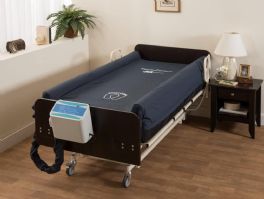 | Comfort Zone Cell-On-Cell LAL (Low Air Loss) Mattresses by Medacure View Product |
If budget is a concern, but the patient still needs clinical-grade pressure relief, this overlay is a great solution. We’ve used it in temporary rehab setups and post-surgical recovery at home.
Best for: Temporary use or caregivers seeking affordable solutions.
Choosing an air mattress for hospital bed use isn’t just about comfort—it’s a clinical decision that can affect wound healing, respiratory health, and even survival. Whether you're a caregiver at home or managing patient care in a facility, we hope this review helps you feel more confident in your selection.
Each of these products has been vetted through direct clinical experience, and they reflect a range of needs—from bariatric support to budget-friendly overlays to advanced therapy systems. And remember—no mattress can replace regular turning, good nutrition, and clinical skin checks. But the right one can make all the difference.

Co-Founder of Rehabmart and an Occupational Therapist since 1993. Mike has spent his professional career working in multiple areas of Occupational Therapy, including pediatrics, geriatrics, hand therapy, ergonomics and inpatient / outpatient rehabilitation. Mike enjoys writing articles that help people solve complex therapeutic problems and make better product choices.






 Mattresses by Medacure "Comfort Zone Cell-On-Cell LAL (Low Air Loss) Mattresses by Medacure")


.png&maxheight=250&width=365&product_name=PressureGuard Protocol Mattress "PressureGuard Protocol Mattress")

_(1).jpg&maxheight=250&width=365&product_name=United Safety Pressure Redistribution Mattress with Raised Perimeter "United Safety Pressure Redistribution Mattress with Raised Perimeter")