Among the many mobility devices out there, a lightweight rollator consistently proves to be one of the most versatile, functional, and empowering tools. Whether you're recovering from an injury, managing chronic conditions like Parkinson’s or MS, or simply seeking more security when walking, the right rollator can make a world of difference.
The challenge is choosing one that balances durability with lightness. Not all lightweight rollators are built the same; differences in frame material, brake systems, handle height, wheel size, and seat comfort can drastically impact performance.
The primary difference lies in the frame material, weight, and ease of transport. Let’s break that down further, however:
Functionally, both types offer similar benefits like improved stability, safety, and the ability to rest while walking, but a lightweight rollator reduces strain during use and transportation. However, it's important to consider trade-offs. For example, standard rollators may offer a higher weight capacity or more robust outdoor performance, whereas lightweight rollators prioritize user comfort and indoor maneuverability.
For many older adults or post-surgical patients, choosing a lightweight rollator improves compliance and daily usage simply because it’s easier to manage. Always check the rollator’s specifications, such as seat height, frame width, and weight capacity, to ensure the best match for your physical needs and lifestyle.
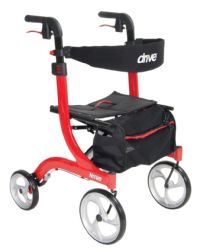
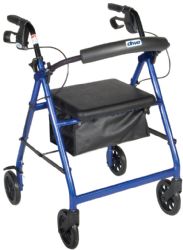
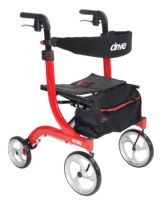 | Drive Nitro Rollator - Drive Medical Euro Style Rollator Walker View Product |
This rollator is one of our go-to recommendations for patients who need an ultra-lightweight device without sacrificing durability or function. The Euro-style design is not only sleek, but also supports superior maneuverability in both tight indoor spaces and outdoor sidewalks.
Best For: Users who prioritize portability and style.
 | Dolomite Legacy Walkers View Product |
This model has a sturdier feel while remaining light enough for most users. We frequently recommend it to clients who want a stable frame for outdoor walking or longer distances.
Best For: Individuals needing enhanced stability on uneven terrain.
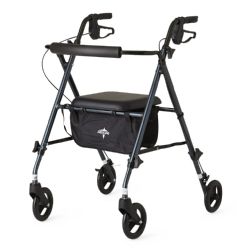
 | Freedom Ultralight Rollator by Medline View Product |
Weighing in at just under 14 lbs, this is one of the lightest models available. It’s excellent for seniors who travel often or for users with limited strength who need something easy to lift into a car.
Best For: Frequent travelers or users with minimal upper body strength.
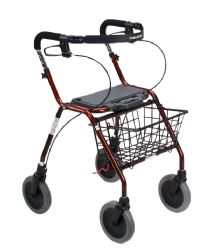
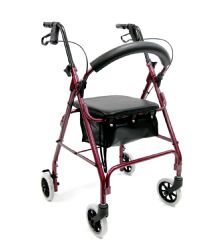
 | Lightweight Foldable Aluminum Rollators with Padded Seat and Storage Basket by Karman Healthcare View Product |
This is one of the most budget-friendly rollators we’ve tested that still delivers reliable performance. The loop brakes are intuitive, especially for users with arthritis or hand weakness.
Best For: Budget-conscious users who want safety and simplicity.
_(1)_(1).jpg&newwidth=365&maxheight=200 "byACRE Carbon Ultralight Rollator") | byACRE Carbon Ultralight Rollator View Product |
At under 11 lbs, this rollator is incredibly light but still provides strong support. The sleek Danish design is a major plus for users who care about aesthetics as much as function.
Best For: Style-conscious users or those who need the lightest frame possible.
 | Drive Aluminum Petite Rollator w/ 6 Inch Casters View Product |
For shorter adults or those with limited leg strength, having a low seat height can be critical. We’ve recommended this to patients recovering from hip or knee replacements who need to sit safely and comfortably.
Best For: Shorter individuals or post-surgical recovery.
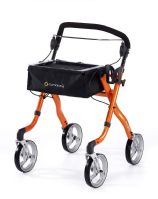 | Lightweight Rollator with One-Hand Brake and Basket - Portable Rolling Walker - Avanti by Comodita View Product |
This rollator feels exceptionally stable and secure. Its extra-wide frame supports larger users without feeling bulky. It’s an excellent mid-weight option for bariatric patients who want mobility support without excessive bulk.
Best For: Anyone wanting a wide, stable frame.
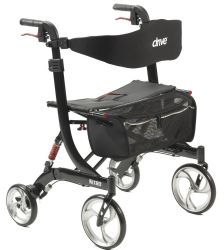
| Rollator with Foldable Lightweight Frame and Enhanced Braking System - Nitro Sprint View Product |
This newer version of the Nitro model improves on its predecessor with enhanced braking and an even easier folding system. Patients love the built-in curb assist and the sturdy feel of this rollator in outdoor use.
Best For: Active users who go from indoor to outdoor terrain frequently.
 | Lightweight Bariatric Rollator by Medline View Product |
This model stands out for its heavy-duty capacity while still being relatively lightweight for its class. We recommend this to clients with higher body weights who still want the ease of movement a rollator can provide.
Best For: Heavier users needing a rollator that doesn't feel clunky.
The byACRE Ultralight Rollator is currently one of the lightest rollators we have, weighing under 11 lbs. Despite its light weight, it offers strong stability and a sleek modern design.
Yes, lightweight rollators are safe when properly adjusted. They provide support while walking and often come with hand brakes, locking systems, and padded seats for resting, making them ideal for elderly users.
Absolutely. Many lightweight rollators, such as the Nitro Sprint and Dolomite Legacy, are designed with large wheels and reinforced frames to handle outdoor surfaces with ease.
Consider your height, weight, mobility level, whether you’ll use it indoors or outdoors, and if you need features like a storage bag, seat height adjustability, or compact folding.
Choosing a lightweight rollator isn’t just about picking the lightest model; it’s about finding the one that aligns with your body, lifestyle, and environment. From ultra-light options for travel to bariatric rollators built for extra support, each product in this guide was selected based on real clinical experience and user feedback. Patients have found renewed independence, confidence, and mobility with the right rollator, and we hope this guide brings the same to you.
If you’re still unsure, we recommend consulting a physical or occupational therapist who can recommend the most appropriate model for your specific needs. And always remember: mobility should never be a compromise.

Co-founder/CEO of Rehabmart, Pediatric Occupational Therapist, husband, and father. Passionate about connecting special needs kids with superb nutrition, sensory integration, and complementary health strategies. Excited about Rehabmart's mission to become the premier online educational platform which empowers caregivers by spotlighting innovative devices and interventions to achieve optimal patient response and recovery.