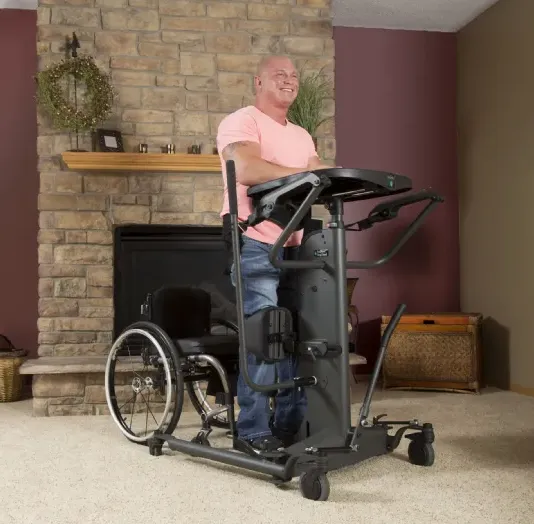
Standing frames are essential mobility aids that help adults with limited weight-bearing abilities stand safely and comfortably. Many occupational and physical therapists use standing frames extensively in their practices for diagnoses such as spinal cord injuries, stroke rehab, and neurodegenerative conditions. Below is a comparison of six of the best standing frames for adults, based on our clinical experience.
A standing frame is a mobility aid that allows individuals with limited lower-body function to stand upright in a supported position. It's commonly used in rehabilitation settings for people with spinal cord injuries, cerebral palsy, multiple sclerosis, or stroke. Standing can improve circulation, reduce pressure ulcers, enhance digestion, and help maintain bone density.
Standing frames benefit individuals who are unable to stand independently due to neuromuscular or orthopedic conditions. This includes adults with spinal cord injuries, multiple sclerosis, traumatic brain injuries, or post-surgical recovery affecting mobility. Occupational and physical therapists often prescribe standing frames to promote weight-bearing, joint integrity, and postural control.
 | Granstand III Modular Standing System View Product |
This is our top recommendation for clients with moderate to severe postural instability. The hydraulic assist provides controlled, supported transitions from sitting to standing. It’s especially effective for patients with cerebral palsy or spinal cord injuries at the mid-thoracic level.
Best for: Individuals with poor trunk control or those needing full postural support
 | Symmetry Solid Seat Stander and Positioning System View Product |
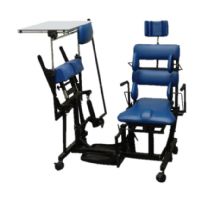
We’ve used this frame in outpatient clinics and school-based therapy due to its adjustability and natural standing alignment. It supports a wide base posture and independent adjustments for trunk and pelvic stability.
Best for: Clinics or multi-user environments needing upright postural support
 | Bailey Tip Resistant Individual Standing Boxes View Product |
These basic frames are ideal for clients with mild physical impairments or early-stage neurological conditions. We’ve used them for static weight-bearing training at home and in community settings.
Best for: Home-based users needing budget-friendly static support
~1.jpg&newwidth=365&maxheight=200 "EasyStand Evolv XT Standing Frame") | EasyStand Evolv XT Standing Frame View Product |
This heavy-duty standing frame is our favorite for bariatric clients or those with long-term mobility rehabilitation needs. It features modular accessories and a rugged design that holds up to 400 lbs.
Best for: Bariatric users or long-term rehab programs needing versatility
This is a powerhouse for clients who cannot bear weight without full assistance. The powered lift feature and wide design support safe transfers and upright positioning, particularly in SNF and hospital settings.
Best for: Skilled nursing or inpatient rehab facilities serving bariatric or severely disabled clients
 | EasyStand StrapStand Adult Standing Frame Packages View Product |
This model provides a different type of transfer: strap-based lifts that allow a more active transition into standing. It’s a fantastic choice for adults with limited upper-body mobility but enough core stability to engage in transfer movement.
Best for: Adults with fair to good trunk control who want to engage in active standing
The recommended daily duration varies by clinical need, but most guidelines suggest 30 to 60 minutes of standing per session, 3 to 5 times per week. Therapists may gradually increase standing duration to improve tolerance and prevent fatigue.
Yes, many standing frames are considered durable medical equipment (DME) and may be covered by Medicare, Medicaid, or private insurance if prescribed by a healthcare provider. Documentation must justify medical necessity, typically for improving function, preventing contractures, or supporting pressure relief in patients with paralysis or neuromotor conditions. Coverage depends on the specific insurance policy and clinical evaluation.
Standing frames come in several types to suit different functional needs:
Yes, many standing frames are designed for home use. Compact and modular models are available for clients with space constraints. Home standing frames are especially beneficial for those who no longer attend regular outpatient therapy but still need the therapeutic benefits of upright weight-bearing. We recommend consulting with your therapist to ensure proper setup, training, and safety.
Choosing the right standing frame is a critical decision for both clinical progress and long-term health outcomes. Each product reviewed here serves a distinct purpose, whether it's a basic home-use model for static positioning, a bariatric-grade frame for full-body support, or a strap-based system for active engagement in therapy. As occupational therapists, we’ve seen how standing frames can enhance bone density, reduce pressure injuries, improve posture, and increase daily function. The key is selecting a device that aligns with the user’s specific diagnosis, strength level, transfer needs, and care setting. By evaluating these six high-quality options, individuals and caregivers can make informed, safe, and medically appropriate choices that support mobility and independence.

Co-founder/CEO of Rehabmart, Pediatric Occupational Therapist, husband, and father. Passionate about connecting special needs kids with superb nutrition, sensory integration, and complementary health strategies. Excited about Rehabmart's mission to become the premier online educational platform which empowers caregivers by spotlighting innovative devices and interventions to achieve optimal patient response and recovery.







.jpg&maxheight=250&width=365&product_name=Accessories for EasyStand Evolv Stander "Accessories for EasyStand Evolv Stander")
