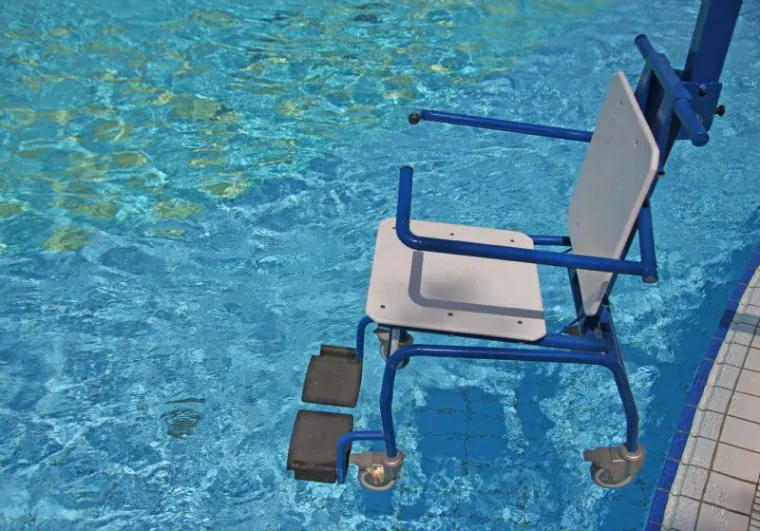
Water wheelchairs offer a vital solution for individuals who require mobility support in and around water. Whether it’s for access to a pool, beach, or therapeutic aquatic setting, the right water wheelchair enhances safety, independence, and dignity. But with different designs, materials, and clinical use cases, knowing what to look for matters.
Water wheelchairs are designed for individuals with:
Whether used at home, in rehab centers, or in public aquatic spaces, these chairs play a major role in ensuring accessibility and safety.
Beach wheelchairs are built for outdoor terrain like sand and often feature large balloon wheels and floating capabilities. Pool wheelchairs are designed for smooth, wet surfaces like pool decks and use smaller, non-slip wheels with corrosion-resistant frames for safe entry and movement in and around water. Each is tailored to a specific environment—beach vs. pool.
Top Pick for Pool Therapy Use: Hippocampe Pool Access Wheelchair by Vipamat
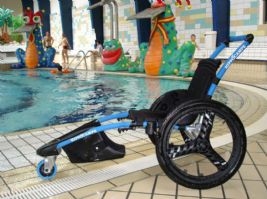 | Hippocampe Pool Access Wheelchair by Vipamat View Product |
Best for Saltwater or Outdoor Pools: Pool Wheelchair with Mesh Sling Seat
.jpg&newwidth=365&maxheight=200 "Pool Wheelchair with Mesh Sling Seat") | Pool Wheelchair with Mesh Sling Seat View Product |
Best for Sand and Saltwater Use: Wheeleez Sandcruiser
 | Beach Wheelchair Made with Balloon Tires and Rotating Casters - Wheeleez Sandcruiser View Product |
Best for Comfort and Positioning Needs: Aquatic Pool Wheelchair
 | Pool Wheelchair - Debug Aquatic View Product |
Most Portable Water Wheelchair: Lightweight Pool Wheelchair with Optional Sliding Footrest
_(1).jpg&newwidth=365&maxheight=200 "Lightweight Pool Wheelchair with Optional Sliding Footrest") | Lightweight Pool Wheelchair with Optional Sliding Footrest View Product |
Best for Commercial or ADA-Compliant Use: Waterproof PVC Pool Wheelchair
.jpg&newwidth=365&maxheight=200 "Waterproof Shower Chair with Wheels, for Bathing or Swimming, Soft Seat, Easy to Clean & Rust-Proof, 300-lb. Capacity, by IPU") | Waterproof Shower Chair with Wheels, for Bathing or Swimming, Soft Seat, Easy to Clean & Rust-Proof, 300-lb. Capacity, by IPU View Product |
Children with developmental or mobility delays need smaller-scale, supportive options with headrests or harnesses.
Chairs with extra-wide frames, reinforced materials, and higher weight limits ensure safety and dignity for heavier adults.
Best for Bariatric Needs: Heavy Duty Shower Wheelchair 400 lbs. Capacity
 | Heavy Duty Shower Wheelchair 400 lbs. Capacity View Product |
Users with strong upper body control can benefit from self-propelling models with push rims and ergonomic handles.
Choosing the right water wheelchair can significantly improve safety, access, and independence for users needing aquatic therapy or recreation. By focusing on intended use, durability, transfer safety, and comfort, both caregivers and users can feel confident in their investment. Whether you’re purchasing for home, clinic, or public facility use, there’s a solution tailored to your needs.

Co-Founder of Rehabmart and an Occupational Therapist since 1993. Mike has spent his professional career working in multiple areas of Occupational Therapy, including pediatrics, geriatrics, hand therapy, ergonomics and inpatient / outpatient rehabilitation. Mike enjoys writing articles that help people solve complex therapeutic problems and make better product choices.





.jpg&maxheight=250&width=365&product_name=Pool Wheelchair with Mesh Sling Seat "Pool Wheelchair with Mesh Sling Seat")

.jpg&maxheight=250&width=365&product_name=AquaTrek Pool Wheelchair "AquaTrek Pool Wheelchair")


.jpg&maxheight=250&width=365&product_name=Deluxe Shower Chair with Solid Soft Seat "Deluxe Shower Chair with Solid Soft Seat")
_(1).jpg&maxheight=250&width=365&product_name=Lightweight Pool Wheelchair with Optional Sliding Footrest "Lightweight Pool Wheelchair with Optional Sliding Footrest")