In clinical and home settings, the 3-in-1 commode is one of the most essential tools we recommend to promote safe, independent toileting. According to ResearchGate, toileting-related falls and functional decline are leading causes of injury among older adults and individuals with limited mobility.
This guide explains what a 3-in-1 commode is, how to use one, when to use one, and how to choose the right option for your needs.
A 3-in-1 commode is a portable, multi-use chair that combines three essential toileting functions in one device:
Most models feature height-adjustable legs, armrests, removable buckets, splash guards, and non-slip feet. Some may include drop arms or padded seats for enhanced accessibility and comfort.
Clinical studies, including those published in the National Library of Medicine, support the use of adaptive toileting equipment to reduce fall risks and promote aging-in-place for older adults.
Older adults who experience balance difficulties, arthritis, or incontinence benefit from a bedside commode that reduces the need to walk long distances, especially at night.
 | 3 in 1 Commode Seat with PVC Safety Rails View Product |
Drive Medical 3-in-1 Commode Seat with Bucket and Splash Guard
A basic, reliable model with a steel frame and adjustable height—ideal for seniors aging in place.
For users who need additional support, bariatric models offer a reinforced frame and wider seat to improve comfort and safety during transfers.
Bariatric 3-in-1 Shower Commode Chair – Samson Deluxe
This heavy-duty model supports up to 600 lbs and includes locking casters for added safety.
If portability and storage are a concern, folding commodes are lightweight and easy to stow.
 | 3 in 1 Folding Commode by Compass Health View Product |
Three-in-One Folding Commode by Medline
Folds compactly for storage or travel and features tool-free assembly.
For individuals with hemiplegia or balance challenges, a lightweight, rust-resistant frame with a removable back provides flexible use and safer transfers.
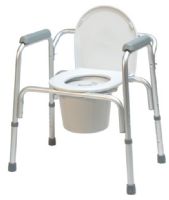 | Lumex 3-in-1 Aluminum Commode with Removable Back Bar View Product |
Lumex 3-in-1 Aluminum Commode with Removable Back Bar
The aluminum frame is easy to move and won’t corrode, which is perfect for long-term neurological rehab.
For patients who require assistance during bathing and toileting, combination commodes can serve dual purposes and reduce transfers.
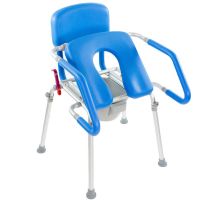 | GentleBoost Uplift 3-in-1 Commode Shower Chair by Platinum Health View Product |
Prevail Rehab Shower Commode Chair with Swing-Away Footrests
Durable and waterproof, this model is perfect for bathroom use, offering full hygiene support.
Some users need a basic but durable 3-in-1 commode that includes key features like a splash guard and adjustable height.
 | 3-in-1 Commode with Bucket, Lid, Splash Guard, and Adjustable Height View Product |
3-in-1 Commode with Bucket, Lid, and Splash Guard by McKesson
Affordable and well-equipped for both home and facility use.
For patients needing side access, drop arms allow for safer lateral transfers and reduce caregiver strain.
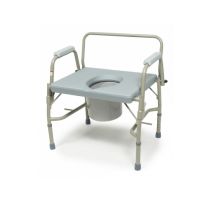 | Bariatric Lumex 3-in-1 Drop Arm Commode Chair by Graham Field View Product |
Lumex Imperial Collection Steel Drop Arm 3-in-1 Commode
This product features heavy-duty steel construction with easy-to-operate drop arms.
For most standard home or rehab settings, a traditional 3-in-1 commode meets basic toileting needs with stable, easy-to-clean components.
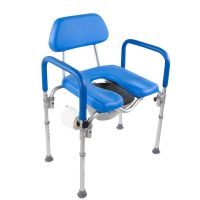 | Dignity Three-in-One Commode Chair by Platinum Health View Product |
Three-in-One Commode with Plastic Armrests
Solid construction, height adjustability, and straightforward design make this ideal for general use.
Set the legs so the user’s feet rest flat on the floor and the knees are at 90 degrees. This promotes optimal ergonomics and safer transfers.
Ensure the frame is level, the feet are slip-resistant, and the floor is dry and clear of hazards.
Train on safe transfers using armrests, slow movements, and supervision when needed.
Dispose of waste and disinfect the bucket and seat after each use to prevent infection.
Research suggests home modifications and assistive toileting devices are among the most effective interventions to prevent falls in older adults.
A 3-in-1 commode is a flexible, evidence-based solution for individuals with mobility limitations, those recovering from surgery, or caregivers supporting individuals in the home. Whether bedside, over the toilet, or as a raised seat, this essential piece of durable medical equipment enhances independence, reduces fall risk, and improves quality of life.
Each clinical scenario, from bariatric care to post-stroke rehab, has a commode model specifically suited to meet the user’s needs. Be sure to consult with your healthcare provider or occupational therapist to determine which features are most appropriate.

Co-founder/CEO of Rehabmart, Pediatric Occupational Therapist, husband, and father. Passionate about connecting special needs kids with superb nutrition, sensory integration, and complementary health strategies. Excited about Rehabmart's mission to become the premier online educational platform which empowers caregivers by spotlighting innovative devices and interventions to achieve optimal patient response and recovery.