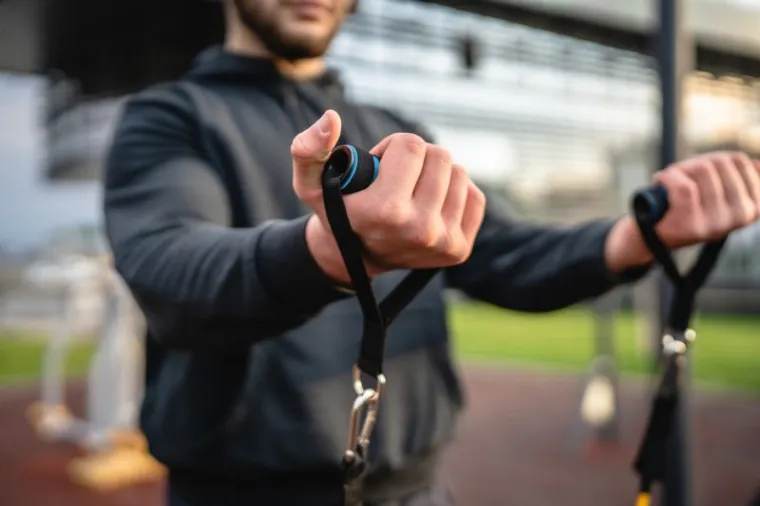
Adaptive variable resistance is a type of training that adjusts resistance based on how much effort a person uses in real time. Instead of working against a fixed weight or set load, the resistance changes as the user pushes or pulls. This helps movement feel safer, smoother, and more natural.
This approach is especially helpful in rehabilitation and controlled strength training. For people recovering from injury, managing long-term conditions, or building strength in a safe way, adaptive variable resistance allows progress without pushing the body beyond its limits.
Most strength equipment uses fixed resistance. A dumbbell, barbell, or weight stack weighs the same every time it is used. This means the body must adjust to the equipment, even when the user feels tired, sore, or unstable. Fixed resistance can be effective, but it does not adjust for daily changes in strength or how strength varies during a movement.
 | Body-Solid Leg and Calf Press Station View Product |
Adaptive variable resistance responds to how much force the user applies. When the user pushes harder, the resistance increases. When the user eases up, the resistance decreases. This creates a system that works with the body instead of against it. A simple way to think about it is like pushing against a strong, controlled resistance system instead of lifting a fixed weight.
Adaptive variable resistance systems sense how much force is being used and respond right away. There is no need to stop and change weights or settings during a session. This allows users to move at their own pace and adjust effort naturally as they exercise.
The body is not equally strong throughout every part of a movement. Many people are strongest in the middle of a push and weaker at the start or end. Adaptive resistance adjusts through the full range of motion, helping keep the challenge consistent without forcing strain at weaker points.
 | Xo-Trainer Adaptive Resistance Strength System for Full Body Training | Fitness Machine with Real-Time Feedback and Progress Tracking View Product |
Because resistance matches effort, movements often feel smoother and more controlled. This can reduce sudden jerks or reliance on momentum that sometimes happen with free weights or traditional machines.
One major benefit of adaptive variable resistance is safety. When effort decreases, resistance also decreases. This lowers the risk of being overwhelmed by a fixed load, which is especially important during rehabilitation or early recovery.
Many people feel nervous about moving after an injury due to fear of pain or re-injury. Adaptive systems and tracking systems help build confidence by allowing users to stay in control of resistance throughout each exercise.
 | HYBAR Smart Weighted Bar KIT With Performance Tracker by Hygear View Product |
Because resistance responds to effort, people are more likely to engage muscles evenly instead of relying on momentum or compensating with other body parts.
Adaptive variable resistance is well-suited for people recovering from surgery, injury, or neurological conditions. It allows resistance to be introduced earlier while still focusing on safety and control.
Common rehab applications include:
For people rebuilding strength after illness or long periods of inactivity, adaptive resistance supports gradual progress without feeling intimidating or unsafe.
Athletes and performance-focused users also benefit from adaptive resistance. It supports controlled power training, functional strength, and movement patterns that carry over into daily activity and sport.
In clinical settings, adaptive variable resistance allows therapists to focus on movement quality instead of constantly adjusting equipment. Resistance changes automatically as the patient gains strength or becomes fatigued.
Because resistance matches ability each day, users can still train effectively even when energy or strength varies. This helps support consistent progress without setbacks.
Many adaptive systems allow movement in multiple directions. This supports training that looks more like real-life tasks or sports movements instead of isolated exercises.
As users become stronger, resistance naturally increases with their effort. There is no fixed limit based on preset weight increments.
Xometrics Fitness designs training systems that use adaptive variable resistance for rehabilitation, strength development, and performance training. Their approach focuses on allowing resistance to respond to the user instead of forcing the user to adjust to fixed loads.
| Xo-Trainer Adaptive Resistance Strength System for Full Body Training | Fitness Machine with Real-Time Feedback and Progress Tracking View Product |
The XO Trainer Resistance System is built around adaptive variable resistance principles. Instead of traditional weights, it uses a resistance system that adjusts continuously based on how much force the user applies.
The XO Trainer is commonly used in physical therapy clinics, training facilities, and other environments where safety, flexibility, and functional movement are important.
Yes. It is commonly used in rehab because it helps reduce overload and supports controlled movement.
Yes. Many athletes use it for functional training and power development.
No. Resistance increases as effort increases, allowing continued progress as strength improves.
Adaptive variable resistance provides a responsive and user-focused approach to both rehab and strength training. By adjusting resistance in real-time, it supports safer movement, better control, and effective training for many different users. Systems like the XO Trainer show how adaptive resistance can support recovery and performance by helping people move with confidence while building strength that fits real-world needs.

Megan Smith, PT, Executive Director of HR
Megan has been a part of Rehabmart since its inception nearly 20 years ago. For the past several years she has been enjoying her role as HR Director while maintaining her Physical Therapy license. When she isn't working on her next in-service or working to find a new team member, she enjoys her five children, helping those who have PT type ailments, baking, practicing yoga, and working out.