Used in fitness and rehabilitation settings, an ergometer is exercise equipment that measures how much work your body performs during movement. It provides controlled resistance and tracks information such as speed, distance, time, or power output. Ergometers are often used in rehab, medical, and fitness settings where safety and accuracy matter. Some models are designed for the upper body, lower body, or total body. When used correctly, an ergometer helps guide structured and measurable exercise.
An ergometer works by applying resistance while recording effort in real time. This lets you measure exercise intensity instead of just guessing. You can adjust the resistance to match your strength, endurance, or recovery needs. Because the workload is controlled, ergometers are safe and consistent, making them useful for both clinical care and long-term training.
An ergometer is often used when exercise needs to be carefully monitored, adjusted, or tailored to a person’s physical ability. In rehabilitation settings, it can support recovery after injury or surgery by allowing controlled, low-impact movement. In clinical and supervised programs, ergometers are commonly incorporated into conditioning routines where tracking resistance, duration, or effort is important. Upper-body models are especially helpful when lower-body activity is limited, and adaptive versions can accommodate pediatric users or individuals with mobility challenges.
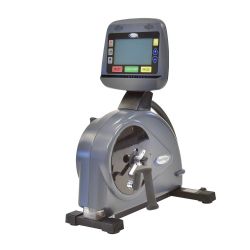
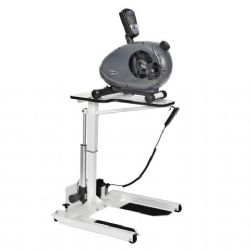
For example, in therapy clinics or home programs focused on arm strength and endurance, equipment like the PhysioTrainer Bi-Directional Upper Body Ergometer provides adjustable resistance and smooth forward and reverse motion. This allows therapists or users to gradually progress intensity while maintaining control.
 | PhysioTrainer Bi-Directional Upper Body Erogometer View Product |
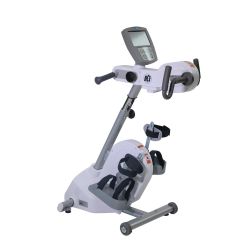
In situations where both upper and lower body movement is beneficial, the eTrainer Upper/Lower Body Passive-Assist Trainer offers added versatility. It supports arm and leg exercise in either passive or active modes, making it suitable for individuals who need assistance initiating movement as well as those working toward increased strength and coordination.
Choosing the right ergometer depends on the user’s goals, mobility level, and whether the focus is rehabilitation, conditioning, or adaptive exercise support.
Ergometers offer steady resistance, making it easy to track progress from one session to the next. Many designs support seated use and wheelchair access. Some allow both passive and active movement, while others combine arm and leg exercise for total-body training. Choosing the right ergometer depends on your movement goals, physical ability, and available space. Proper setup ensures comfort and safety.
Designed for both clinical and fitness environments, this type of exercise device measures effort and tracks progress over time. It supports safe, controlled movement and can be adjusted to accommodate people with a wide range of abilities. Ergonometers are available for upper-body, lower-body, pediatric, and full-body use. When choosing one, it’s important to think about the user’s abilities, the type of movement they need, and how the equipment will be used day to day. With the right setup, an ergometer can make regular exercise easier while providing reliable feedback on progress.

Co-founder/CEO of Rehabmart, Pediatric Occupational Therapist, husband, and father. Passionate about connecting special needs kids with superb nutrition, sensory integration, and complementary health strategies. Excited about Rehabmart's mission to become the premier online educational platform which empowers caregivers by spotlighting innovative devices and interventions to achieve optimal patient response and recovery.