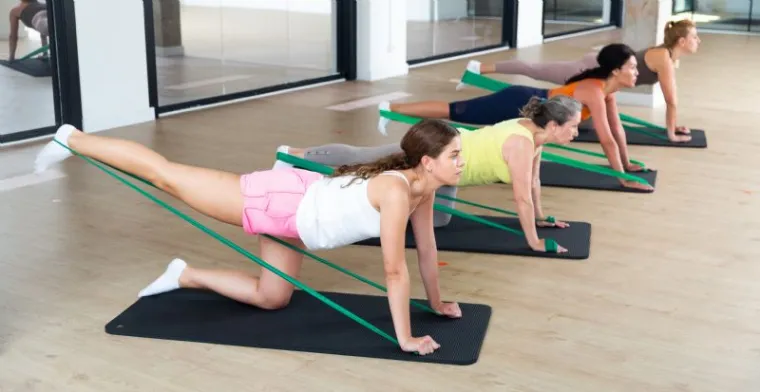
Resistance training is a way to make your muscles stronger through controlled movements. It focuses on creating enough challenge for your muscles to work harder than they do during everyday activities. This type of training is commonly used in fitness, rehabilitation, and general wellness programs because it can be adjusted to fit different needs and settings.
Resistance training can fit many ability levels without requiring high intensity or long workouts. When combined with other activities, it can support overall strength, movement, and function.
Common features of resistance training:
Exercises can also be adjusted by how much force is used, how they are set up, or how fast they are done. Small changes can make an exercise easier or harder without changing its overall form. This makes resistance training flexible and suitable for many routines.
Resistance training can fit into many routines when it’s adjusted to match individual abilities. It is often used to support the kind of strength needed for everyday tasks like lifting, carrying items, or climbing stairs. In rehabilitation settings, exercises are typically chosen with care to help rebuild strength after injury, surgery, or periods of reduced activity.
Older adults may also include resistance training as part of a regular movement routine. The resistance used does not need to be heavy to be effective. Lighter resistance, when used with control, can still challenge muscles. Because resistance can be increased gradually, this type of training is often introduced slowly and adjusted over time.
Resistance training is often used by:
Some people use elastic resistance systems, like the TheraSlide Resistance Band Workout System, which rely on adjustable band tension to create controlled muscle effort. Resistance can be modified by changing the band setup or body position, making this format adaptable for both fitness and rehabilitation use.
 | Wall-Mounted TheraSlide Resistance Band Workout System by Elgin View Product |
Other options include machine-based resistance equipment, such as the Body-Solid Leg Press / Calf Press Single Station. These systems guide lower-body pressing movements with adjustable load, helping support consistent positioning throughout the exercise.
 | Body-Solid Leg and Calf Press Station View Product |
Resistance training is commonly paired with other forms of physical activity, such as walking or stretching, rather than used on its own. This pairing allows different types of movement to support one another within a broader routine and helps balance overall movement demands.
Resistance training is an easy way to include muscle-strengthening exercises in almost any routine. It can adapt to different settings, goals, and ability levels. Guidance from a healthcare or fitness professional can help ensure exercises match individual needs. Over time, exercises can be adjusted as needs change without starting over. This flexibility is why resistance training is used across fitness, rehab, and wellness programs for people of all ages.

Megan Smith, PT, ED of Human Resources & PEO Services
Megan has been a part of Rehabmart since its inception nearly 20 years ago. For the past several years she has been enjoying her role as HR Director while maintaining her Physical Therapy license. When she isn't working on her next in-service or working to find a new team member, she enjoys her five children, helping those who have PT type ailments, baking, practicing yoga, and working out.