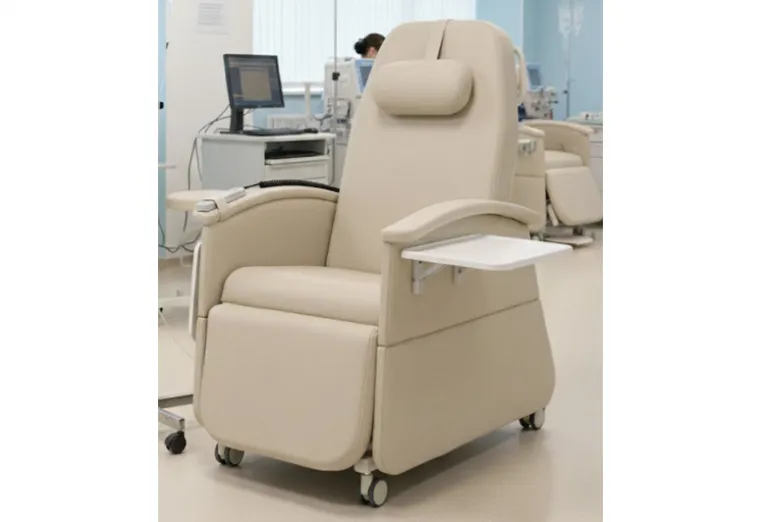
Long treatments like dialysis or IV infusions can take hours. Sitting in one place that long can quickly become uncomfortable, and even painful, without the right setup. That’s why the chair matters more than most people realize.
Instead of relying on extra pillows or constant repositioning, starting with the right medical recliner chair can make the entire experience smoother from the beginning.
During treatment, patients need to stay still while also remaining relaxed. Without proper support, it’s common to see:
A well-designed dialysis chair helps reduce these issues by supporting the body evenly and allowing safe, simple position changes throughout the session.
The Comfort-1 Treatment Recliner is designed for environments where patients spend extended time seated. Its features focus on helping patients stay supported while also making adjustments simple for caregivers.
 | Medical Recliner Chair - Comfort-1 Treatment and Care Recliner for Medical Facilities with Entry, Bed, and Trendelenburg Positions View Product |
One of the key features is synchronized movement between the backrest and legrest. As the chair reclines, both sections move together, helping the body stay properly aligned.
This makes it easier for patients to find a comfortable position without frequent manual adjustments. In a treatment recliner, this type of movement can help reduce strain on the lower back and legs over time.
Patients often need to move between different positions throughout a session. This dialysis recliner supports entry, bed, and Trendelenburg positions, all commonly used in clinical settings.
These built-in options make it easier for caregivers to respond to patient needs, whether assisting with seating, allowing for deeper rest, or making adjustments during treatment.
In some cases, patients may experience a drop in blood pressure. When that happens, moving into the Trendelenburg position can help support circulation.
The chair includes an emergency lever that allows caregivers to make this adjustment quickly. Having this capability readily available supports safer, more responsive care.
Getting in and out of the chair is an important part of the overall experience. Removable armrests allow for easier lateral transfers, which is especially helpful for patients with limited mobility.
The central-locking caster system also allows staff to move and secure the chair with ease. Together, these features help the recliner integrate smoothly into daily clinical routines.
Because these chairs are used frequently, durability and cleanliness are essential. The Comfort-1 features healthcare-grade, bleach-resistant upholstery designed to withstand repeated cleaning and disinfection.
This helps maintain the chair’s condition while supporting infection control standards in busy care environments.
| Medical Recliner Chair - Comfort-1 Treatment and Care Recliner for Medical Facilities with Entry, Bed, and Trendelenburg Positions View Product |
Comfort during long treatments isn’t just about one feature; it’s about how everything works together.
A thoughtfully designed medical recliner chair supports the body, allows for safe and simple repositioning, and fits seamlessly into the clinical workflow. Features like synchronized movement, flexible positioning, and durable, easy-to-clean materials all contribute to reducing strain over time.
For patients, that means a more manageable and less uncomfortable experience. For caregivers, it leads to smoother, more efficient care throughout long sessions.

Megan Smith, PT, ED of Human Resources & PEO Services
Megan has been a part of Rehabmart since its inception nearly 20 years ago. For the past several years she has been enjoying her role as HR Director while maintaining her Physical Therapy license. When she isn't working on her next in-service or working to find a new team member, she enjoys her five children, helping those who have PT type ailments, baking, practicing yoga, and working out.







 "Broda Synthesis Positioning Wheelchair (V4)")


