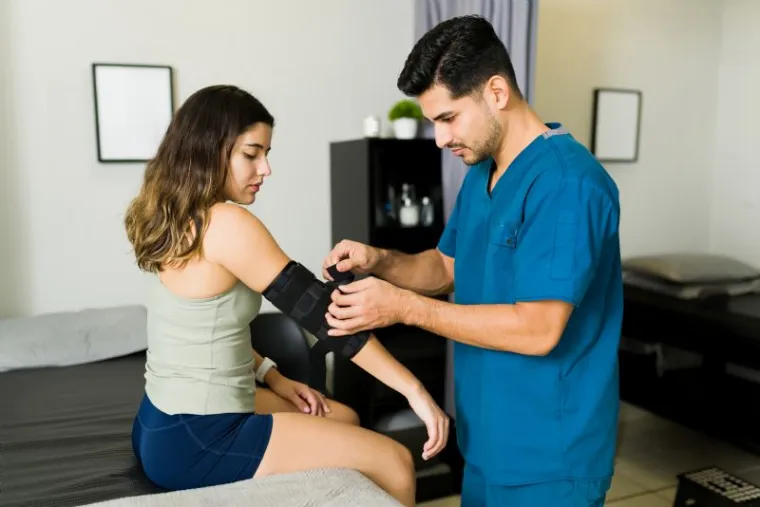
Elbow braces are widely used in orthopedic and neurological care to support the elbow joint through various stages of recovery, rehabilitation, and daily function. Whether you're healing from surgery, managing chronic conditions like tendonitis or arthritis, or supporting a loved one with post-stroke spasticity, the right elbow brace can significantly improve comfort, protect healing tissues, and preserve joint range of motion.
With a variety of brace types available, ranging from static orthoses to dynamic ROM-controlled devices, understanding which design fits your clinical needs is essential. This guide breaks down the key categories of elbow braces, clinical use cases, and product-specific features to help you make an informed decision.
An elbow brace supports, protects, or stabilizes the elbow joint depending on the type of brace and the clinical condition it’s used for. At a basic level, elbow braces help reduce pain, restrict harmful movements, offload stressed tissues (like tendons or ligaments), or promote healing after surgery or injury. Some braces provide firm immobilization to allow bones and soft tissue to heal, while others offer mild compression to reduce swelling or increase proprioceptive awareness during activity.
For example:
The goal of an elbow brace is to either protect the joint during healing or enhance its function by offering structural support.
You should wear an elbow brace when a healthcare provider recommends it to support recovery, manage pain, or prevent further injury. The timing and frequency depend on your condition:
Ultimately, the correct wear schedule depends on your diagnosis and the specific brace type. Always follow clinical guidance to avoid complications such as reduced circulation or dependency.
Choosing the right elbow brace begins with understanding the category it falls under and the clinical purpose it serves. Below are the six most common types of elbow braces, each matched with real-world use cases to guide your choice.
These braces hold the elbow in a fixed position to support alignment, prevent contractures, and reduce spasticity. They are commonly used in post-stroke rehabilitation, cerebral palsy, or orthopedic maintenance positioning.
This orthosis features a malleable frame that can be adjusted without tools, paired with a soft, removable terrycloth cover that cushions the limb. Ideal for long-term positioning, it’s especially effective for patients with increased tone or contractures from neurological disorders. The adjustable straps provide a customizable fit, while the included cover can be machine-washed.
 | The Bend-to-Fit Comfy Splints Elbow Orthosis View Product |
Designed to provide low-load, prolonged-duration stretch (LLPS), this brace gradually extends the elbow joint for contracture management. It features an adjustable metal frame with no tools required, a padded forearm support, and optional flexion stop kits for clinical customization. This is ideal for orthopedic or neurologic patients with chronic loss of elbow extension.
 | Static-Pro® Elbow Orthoses View Product |
These braces feature jointed hinges that allow controlled elbow flexion and extension, which is essential in the early stages of orthopedic rehabilitation.
Featuring bilateral aluminum hinges and dial-controlled flexion/extension stops, this splint supports progressive rehabilitation for post-surgical or post-injury cases. It allows for motion adjustments from full extension to 120° of flexion, enabling clinicians to set and restrict range as healing progresses. The breathable foam liner enhances patient comfort during prolonged use.
This advanced brace offers telescoping length adjustment, allowing it to accommodate users with different arm lengths. It includes ROM settings that limit extension and flexion from 0° to 120°, providing critical protection post-surgery or trauma. The universal fit design reduces inventory requirements for clinics, and the strap system offers secure support.
 | VertaLoc Protective and Supporting Elbow Brace Orthosis View Product |
Dynamic braces apply a controlled stretch to the elbow joint, making them essential for the rehabilitation of stiff or contracted joints.
This device combines a comfortable static frame with a built-in spring-loaded goniometer that provides dynamic extension. Clinicians can set the brace to deliver gentle pressure toward full extension while still allowing flexion. The no-tools-needed adjustments and soft, washable cover make it suitable for inpatient or home use.
 | Comfy Spring Loaded Goniometer Elbow Orthosis View Product |
Supportive elbow braces offer flexible compression and joint stabilization. These are ideal for overuse injuries, chronic instability, and arthritis management.
This low-profile brace uses semi-rigid anatomically shaped shells and an adjustable elastic strap to provide targeted compression. It offers moderate stabilization without full immobilization, allowing users to remain active while reducing strain on the joint. Lightweight and breathable, it’s a great choice for managing tendonitis, chronic elbow pain, or ligament laxity.
 | Push Med Elbow Brace View Product |
These specialized braces help relieve pressure on the ulnar nerve, especially at night or during prolonged elbow flexion.
Made from breathable neoprene and lined with plush cotton, this soft brace cushions the elbow and keeps it in a neutral or slightly extended position. The contoured pad prevents deep flexion during sleep, making it especially effective for managing cubital tunnel syndrome or early-stage ulnar neuropathy.
 | Comfort Cool Ulnar Nerve Elbow Orthosis View Product |
These orthoses restore lost rotational movement of the forearm by applying gentle, sustained stretch in either direction.
This lightweight splint offers adjustable dynamic tension to restore forearm rotation. The tension system gradually improves pronation or supination, depending on application, and the breathable frame minimizes skin irritation. It’s frequently used in cases of stroke, radial nerve injury, or orthopedic trauma affecting forearm mobility.
 | LMB Pronation Supination Splint View Product |
Yes, elbow braces, especially compression or strap-style models, can reduce strain on the tendons and relieve pain from tennis elbow (lateral epicondylitis) or golfer’s elbow (medial epicondylitis). They absorb stress and promote healing by offloading pressure on affected tendons.
Yes, many elbow braces are designed for nighttime use, especially for conditions like cubital tunnel syndrome. These braces keep the elbow extended to relieve ulnar nerve pressure. Always consult with a healthcare provider before sleeping in any orthosis.
Ulnar nerve elbow braces are best for nerve-related pain, particularly from cubital tunnel syndrome. These braces prevent excessive bending and provide targeted padding to protect the nerve during rest or repetitive activities.
An elbow brace should be snug enough to provide support without restricting circulation. It shouldn’t cause numbness or tingling. If discomfort or swelling occurs, loosen the brace or consult a healthcare provider for a better fit.
Yes, elbow braces with light compression or thermal properties can help reduce inflammation and stiffness in arthritic elbows. They improve joint stability and may reduce pain during daily activities.
Elbow braces serve an essential role in the treatment and management of orthopedic injuries, nerve entrapments, and neurological conditions affecting upper limb function. From adjustable braces for post-operative care to static orthoses designed for contracture prevention in stroke recovery, the right device can reduce pain, improve mobility, and prevent long-term complications. By understanding the different types of elbow braces and matching them to your unique condition, you can enhance recovery outcomes and improve daily quality of life.
Always consult with a healthcare provider to ensure proper brace selection, fit, and usage.

Co-Founder of Rehabmart and an Occupational Therapist since 1993. Mike has spent his professional career working in multiple areas of Occupational Therapy, including pediatrics, geriatrics, hand therapy, ergonomics and inpatient / outpatient rehabilitation. Mike enjoys writing articles that help people solve complex therapeutic problems and make better product choices.








 "ARYSE Adjustable ROM Elbow Brace (one size fits all)")
