
Choosing the right knee immobilizer is a critical step in the recovery process following surgery, trauma, or ligament injury. Immobilizers help stabilize the joint, reduce pain, and prevent further damage during rehabilitation. In this guide, we’ve selected the top five best knee immobilizers for a variety of clinical situations, with expert recommendations based on comfort, adjustability, and medical-grade effectiveness.
Usually made up of a combination of metal, foam, fabric, and plastic, and attached and detached with hook-and-loop straps, thigh-to-shin straight immobilizers come in a variety of sizes, designs, and colors. A knee stabilizer is usually adjustable and is fitted by a healthcare provider to be worn over clothing. Knee stabilizers are designed for people who need to walk or stand, and are usually removed by the user when lying flat in bed. These support devices are most often prescribed in conjunction with physical therapy to protect and strengthen the area while healing.
An ill-fitting knee stabilizer that doesn’t stay in place not only detracts from healing, it can also cause a fall or make an injury worse. More sophisticated than off-the-shelf knee braces, most often worn for daily activities or sports, knee stabilizers are measured according to leg length and circumference to ensure a proper fit.
All knee stabilizers prevent you from bending your leg, but different straight stabilizers address injuries of differing severity. Lighter-weight cloth and canvas designs are more comfortable and can be used with injuries that are not as serious. When more support is needed, a stiffer model made of foam or a plastic version with metal T-bar stays is a better choice for the additional stability they provide.
All knee stabilizers fulfill splinting needs, but they range in the additional features they offer. From built-in ice packs for cold therapy to straps that provide compression therapy, there are additional options you can choose to reduce pain and swelling.
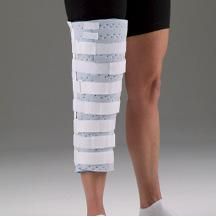
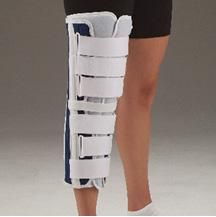
 | Tri Panel Knee Immobilizer View Product |
This versatile immobilizer provides exceptional post-operative support with rigid stays and breathable padding. It’s ideal for stabilizing the knee after surgeries like ACL or meniscus repair and for use during the early healing phase following trauma.
Use Case: Post-operative immobilization or acute knee trauma
Features: Loop-and-lock closures, foam construction, and movable side panels
Best for: Patients needing firm stabilization immediately post-injury or surgery
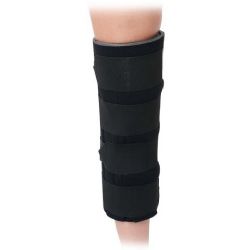
| Adjustable Knee Immobilizer with Hook and Loop Straps View Product |
Designed for situations requiring customizable immobilization, this brace features adjustable straps to ensure a secure and comfortable fit, accommodating various leg sizes and shapes.
Use Case: Customized immobilization for post-injury or post-surgical recovery
Features: Adjustable straps, foam construction, medial and lateral stays
Best for: Patients needing adjustable immobilization tailored to their leg dimensions
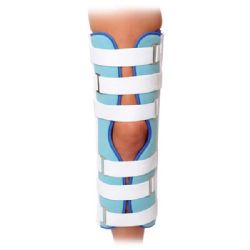
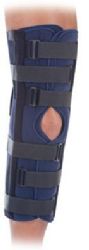
 | Procare 3-Panel Knee Splint View Product |
This immobilizer provides superior medial-lateral control through a modular, three-panel design that conforms to the patient’s leg. Ideal for general immobilization, it suits conditions such as patellar subluxation, joint hyperextension, or mild sprains.
Use Case: General immobilization with anatomical custom fit
Features: Patella strap, adjustable side panels, multiple length options
Best for: Patients needing full knee immobilization and a secure anatomical fit
 | Pedi-Wrap Leg Immobilizers with Straps View Product |
Children recovering from fractures, dislocations, or post-operative procedures need support tailored to their smaller anatomy. This pediatric-specific immobilizer offers safe, secure stabilization with soft interior padding to prevent skin irritation.
Use Case: Pediatric fractures, dislocations, or post-op support
Features: Sized for children, medial and lateral stays, breathable lining
Best for: Young children requiring full knee immobilization
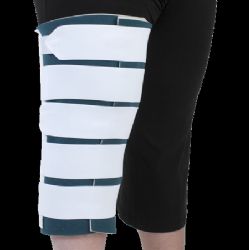
 | Bariatric Knee Immobilizer View Product |
This bariatric-specific immobilizer is engineered to provide secure stabilization for patients with larger leg circumferences. It features wide panel construction and enhanced strap length for a snug yet comfortable fit without compromising support.
Use Case: Immobilization support for bariatric patients recovering from surgery or acute knee injury
Features: Wide-set medial and lateral stays, extended strap system, extra-large sizing for increased limb width
Best for: Plus-size or bariatric individuals requiring full-knee immobilization after injury or surgery
Knee immobilizers are stiffer than knee braces, and are used in place of a heavy cast.
Yes, knee immobilizers are worn when walking or standing, and can usually be removed in bed or when sitting with your leg extended unless otherwise instructed by your healthcare provider.
No. Even if you drive a vehicle with an automatic transmission and don’t need both legs to operate your vehicle, you should not drive while you are suffering from any impairment.
The knee immobilizer should be put on with the bars (stays) on either side of the knee. The knee should be at the halfway point of the brace, and you should fasten it starting at the bottom and working your way up.
A T-bar is a kind of stay that is included in the design of a knee immobilizer because of the added strength it provides.
The specific dimensions required to choose an appropriately sized knee immobilizer are the circumference of your thigh and the circumference of your calf, each measured about six inches from the middle of your kneecap. Since some knee immobilizers take the width of your kneecap into consideration when sizing, measure that as well by passing a tape measure over the widest point of the center of your kneecap.
Whether you're recovering from a complex surgery, managing a ligament tear, or seeking a secure fit for pediatric use, choosing the right knee immobilizer can make or break your rehabilitation process. From rigid immobilizers for total stability to hinged options that allow ROM progression, the best knee immobilizer is one that fits your stage of recovery and physical needs. Each product listed here meets professional-grade standards and supports a wide variety of orthopedic use cases.

Co-Founder of Rehabmart and an Occupational Therapist since 1993. Mike has spent his professional career working in multiple areas of Occupational Therapy, including pediatrics, geriatrics, hand therapy, ergonomics and inpatient / outpatient rehabilitation. Mike enjoys writing articles that help people solve complex therapeutic problems and make better product choices.








.jpg&maxheight=250&width=365&product_name=Foam Knee Immobilizer with Compression Straps "Foam Knee Immobilizer with Compression Straps")